Wednesday, 29 April 2020

In conversation with Sasha Astafyeva, Atomico’s new consumer-focused investment partner

European VC firm Atomico announced this week that it has hired Sasha Astafyeva as a new investment partner.

Astafyeva previously spent three years as a principal at Felix Capital. In her new role, she’ll lead “sourcing, due diligence, and management” of consumer tech companies, according to a company statement.

Originally from Ukraine, Astafyeva was previously head of business intelligence and strategy at Lyst, a London-based online fashion marketplace. She has also worked at online real estate marketplace VivaReal as the company’s VP of finance and business intelligence and did a stint at Dafiti, a Latin American online fashion company.

We caught up with Astafyeva for a conversation that spanned the coronavirus crisis’ impact on her area of interest, new trends during and potentially after lockdown and how it feels to be a consumer-focused investor in turbulent times.

TechCrunch: Congratulations on joining Atomico as a partner. However, isn’t this a terrible time to be a consumer-focused VC, given that we are facing the worst downturn in many of our lifetimes?

Sasha Astafyeva: Thank you for the congratulations, first of all! I’m very excited to join the team and help lead our consumer-focused efforts. It is absolutely an interesting time to join as we find ourselves in a world with highly elevated levels of uncertainty, tremendous economic hardships across the world and varying, and often fast-changing, responses of countries to this new reality. I think that we are only seeing the beginning of this and time will tell what our new reality will look like.

However, I would respectfully challenge the idea that it’s a terrible time to be a consumer-focused investor today. There are sectors of the consumer space that have been resilient and have even thrived, in the current environment, and speaking in a more macro way, I do think that there will be a trickle-down impact to other sectors of the economy beyond consumer as we continue to see the full effects of the current crisis. The task becomes for all of us, not only consumer investors but investors in general, to think about long-term impacts of the current situation we find ourselves in and adjust accordingly.


from Startups – TechCrunch https://ift.tt/2VM4azF
via IFTTT

Zetta Venture Partners’ Jocelyn Goldfein chats about AI investing

Earlier this month, href="https://www.zettavp.com/">Zetta Venture Partners, a B2B, AI-focused venture outfit, announced a new $180 million fund.

As new VC funds are anecdotally a bit thinner on the ground these days — and because we’re in the midst of economic upheaval, which is changing investing patterns and shaking up startup verticals — I got on the phone with Zetta’s Jocelyn Goldfein (a TechCrunch regular) to chat about what her firm is doing and what’s up with AI investing.

The fund

Zetta’s new fund is about 50% larger than its preceding capital pool, which was roughly double its first fund. If you don’t want to do the math, Zetta’s first fund was worth $60 million, and its second $125 million.

Zetta will invest in B2B-focused, AI-powered seed-stage startups like it has before, but with more capital. I was curious about cadence: Would the firm write more checks more quickly now that it has more capital? Per Goldfein, the firm is keeping its pace and strategy pretty much the same with preceding funds, though it has promoted a principal from within who will begin to lead deals from the new fund.

Why more money if things are mostly looking the same? Zetta wants the capability to write larger checks and take a bit more ownership, so it needs more capital. In turn, defending those percentages requires more capital; you get the idea.

Pace, pricing

Early in our chat with Goldfein it became obvious that it’s an active time for AI-focused startups to raise, thanks to COVID-19-driven uncertainty. According to Goldfein, founders who have yet to raise their first capital are “looking at the funding window and thinking, oh, boy, if we thought we might raise three months from now, maybe we should just try now.” Even more, some companies that have already raised are going back to the market for top-ups. Goldfein said those startups are looking for “a little extra runway.”


from Startups – TechCrunch https://ift.tt/2xhUhAr
via IFTTT

Rapid7 is acquiring DivvyCloud for $145M to beef up cloud security

Rapid7 announced today after the closing bell that it will be acquiring DivvyCloud, a cloud security and governance startup for $145 million in cash and stock.

With Divvy, the company moves more deeply into the cloud, something that Lee Weiner, chief innovation officer says the company has been working towards, even before the pandemic pushed that agenda.

Like any company looking at expanding its offering, it balanced building versus buying and decided that buying was the better way to go. “DivvyCloud has a fantastic platform that really allows companies the freedom to innovate as they move to the cloud in a way that manages their compliance and security,” Weiner told TechCrunch.

CEO Corey Thomas says it’s not possible to make a deal right now without looking at the economic conditions due to the pandemic, but he says this was a move they felt comfortable making.

“You have to actually think about everything that’s going on in the world. I think we’re in a fortunate position in that we have had the benefit of both growing in the past couple years but also getting the business more efficient,” Thomas said.

He said that this acquisition fits in perfectly with what he’s been hearing from customers about what they need right now. “One area of new projects that is actually going forward is how people are trying to figure out how to digitize their operations in a world where they aren’t sure how soon employees will be able to congregate and work together. And so from that context, focusing on the cloud and supporting our customers’ journey to the cloud has become an even more important priority for the organization,” he said.

Brian Johnson, CEO and co-founder at DivvyCloud says that is precisely what his company offers, and why it should fit in well with the Rapid7 family. “We help customers achieve rapid innovation in the cloud while ensuring they remain secure, well governed and compliant,” he said. That takes a different playbook than when customers were on prem, particularly requiring automation and real-time remediation.

With DivvyCloud, Rapid 7 is getting a 7-year old company with 70 employees and 54 customers. It raised $27.5 million on an $80 million post-money valuation, according to PitchBook data. All of the employees will become part of the Rapid7 organization when the deal closes, which is expected to happen some time this quarter.

The companies say that as they come together, they will continue to support existing Divvy customers, while working to integrate it more deeply into the Rapid7 platform.


from Startups – TechCrunch https://ift.tt/2W2RVxA
via IFTTT

Dear‌ ‌Sophie:‌ Will a PPP loan‌ affect my visa renewal or green card?

Here’s another edition of “Dear Sophie,” the advice column that answers immigration-related questions about working at technology companies.

“Your questions are vital to the spread of knowledge that allows people all over the world to rise above borders and pursue their dreams,” says Sophie Alcorn, a Silicon Valley immigration attorney. “Whether you’re in people ops, a founder or seeking a job in Silicon Valley, I would love to answer your questions in my next column.”

“Dear Sophie” columns are accessible for Extra Crunch subscribers; use promo code ALCORN to purchase a one or two-year subscription for 50% off.


Dear‌ ‌Sophie:‌ ‌ ‌

I’m a tech founder on an ‌E-2‌ ‌investor‌ ‌visa.‌ ‌Will‌ ‌receiving‌ ‌PPP‌ ‌funding‌ ‌count‌ ‌against‌ ‌me‌ when I renew my E-2 or file my I-485 for my green card given‌ ‌the‌ ‌“Public‌ ‌Charge”‌ restrictions?

— E-2 Employer ‌in‌ Emeryville ‌


Dear‌ ‌E-2‌ Employer,

Thank you for starting a business in the United States and for your efforts to keep your team employed. Since the federal government increased funding for the Paycheck Protection Program (PPP) last week, your question is timely.


from Startups – TechCrunch https://ift.tt/35cKkRe
via IFTTT

Tuesday, 28 April 2020

Investors, startup founders in India pool $13M to fund projects that fight coronavirus

More than 150 investors and entrepreneurs in India are funding dozens of projects in a bid to help millions better combat the COVID-19 epidemic and help the nation’s booming startup ecosystem withstand the economic devastation it has caused.

The investors said they have contributed 1 billion Indian rupees — or $13 million — of their own money to the ACT Grants initiative, which was unveiled late last month.

The group — which includes several prominent industry figures including Nandan Nilekani, Paytm’s Vijay Shekhar Sharma, Flipkart’s Kalyan Krishnamurthy, Oyo’s Ritesh Agarwal, Udaan’s Sujeet Kumar, Freshworks’ Girish Mathrubootham, CRED’s Kunal Shah, and Times Internet’s Miten Sampat — has funded 32 projects to date.

These projects span six themes, including solutions that could help curtail the spread of the Covid-19 disease, development of testing and detection kits, building medical equipment such as ventilators, and taking care of mental health.

The group came together last month when India had just begun to see cases of the coronavirus disease.

“As governments across the globe started to take measures to combat this pandemic, one thing that came up in our conversations with other investors, startup founders, and startup employees was this urgency to not sit and watch what the government does but help and pitch in as an industry,” said Dev Khare, a partner at Lightspeed Venture Partners, in an interview with TechCrunch.

There have been 29,435 known cases of coronavirus in India, according to the Ministry of Health and Welfare. As of Tuesday evening, at least 886 people had died.

Investors from dozens of venture capital and private equity firms including Accel, Lightspeed Venture Partners, Bessemer Venture Partners, Matrix Partners India, Kalaari Capital, Eight Roads Ventures, 3One4Capital, Sequoia Capital India, and Tiger Global have personally participated in the initiative.

VCs in India moved quickly last month to warn startups in the country to be aware of the effect the pandemic might have on their businesses — despite the record $14.5 billion Indian startups raised in the past year.

In a joint letter earlier this month, several prominent tech investment funds told startup founders that they may find it especially challenging to raise fresh capital in the next few months as they enter the “worst period.” (They have also requested the government to provide a relief package.)

Several trade bodies including Nasscom and TIE Global that count American tech giants such as Facebook, Google, and Amazon among their members are also supporting ACT Grants. Amazon’s AWS additionally is helping these projects with infrastructure services.
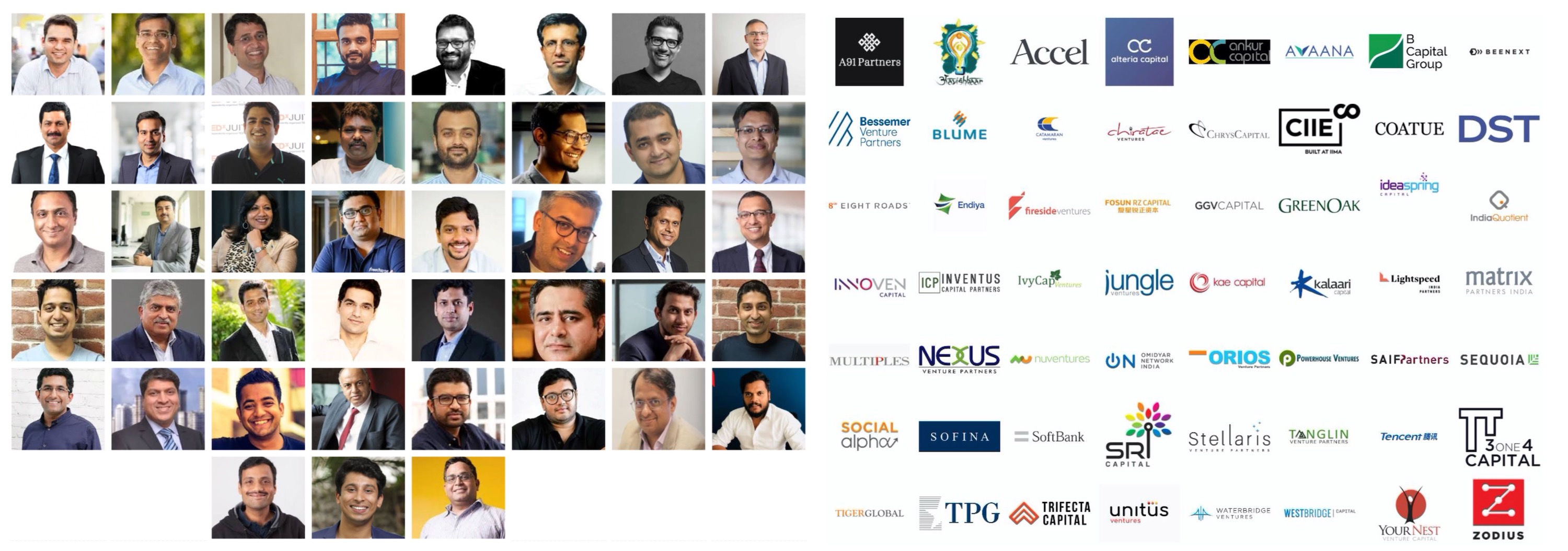
On left, some of the startup founders and other industry figures who have contributed to ACT Grants. On right, names of VC and PE funds whose partners have contributed in their personal capacity

One of the projects to receive the grant has been developed by Pune-based MyLab, a startup that has emerged as one of the biggest manufacturers of test kits in India.

“They manufactured between 20,000 to 25,000 test kits last year. In the past few weeks, the number has ballooned to 300,000,” said Abhiraj Singh Bhal, co-founder and chief executive of Urban Company, which runs an online marketplace for freelance labor.

“We offered them the grant money, but also our expertise in scaling their operation,” said Bhal. ACT Grants also went to another six testing projects, he said.

Grants aren’t going solely to testing projects. StepOne, another grant-winning project, has built a cloud infrastructure to handle over 30,000 calls a day and offer telemedicine services to complement helpline numbers run by state governments that are struggling to keep up with high traffic.

And some of the projects that have received grants are developing masks and other items to supply enough protective gears to the healthcare workers. (A full list of the funded projects and the grant amounts they have received is here.)

There are no strings attached to these grants. Funding a project does not give investors any equity in the developer’s startup, said Prashanth Prakash, a partner at Accel in an interview. And there is a large team that screens and selects projects for providing grants, he said. They have received more than 1,500 applications to date.

An investor, who is not part of ACT Grants, said though the initiative is commendable, he believed this group could have made a bigger impact if they chose to help put food in front of hundreds of millions of Indians who don’t know where their next meal would come from. “There are better ways to be resourceful,” he said, requesting anonymity as he did not want to upset the community.

“That said, the fact that all of these people, many of whom aggressively compete for deals, have come together at all and contributed their own money — and not of their LPs — is unprecedented and they deserve all the praise and support,” he said.

The group’s influence and connection in the industry also means that these projects have better odds of seeing deployment at scale. The group is already engaging with various state governments and the federal government to explore ways to work together — and have started to make inroads, said Accel’s Prakash.

But as the projects scale, the group is seeking for more individuals from across the globe to contribute. “Anyone who wants to help India, one sixth of the world’s population, fight Covid-19 is welcome to contribute,” said Lightspeed’s Khare.

There’s even an international component for people outside of India to contribute. ACT Grants has partnered with United Way, a Virginia-based nonprofit that enables people outside of India to make charitable, tax-deductible donations.


from Startups – TechCrunch https://ift.tt/3cZ6MjB
via IFTTT

Spark fast follows with a $25M Series B round into customer success platform Catalyst

The world has been turned upside down the past few weeks, but one lesson of business remains as important as ever: treating your customers well is the best avenue to future business strength, particularly at a moment of extreme stress.

As businesses come to terms with the economic crisis underway, executives are moving resources from customer acquisition to customer retention — and that’s proving very lucrative to startups that service the customer success market.

Case in point: New York City-based Catalyst, which I profiled just last summer following its $15 million Series A led by Accel’s Vas Natarajan, has seen huge revenue growth the past few months. The data-driven customer success platform has seen its revenue grow by 380% since the Series A financing according to CEO Edward Chiu.

Steep revenue growth is (unsurprisingly) attractive to investors, and in a moment of fortuitous timing, the company signed a $25 million Series B term sheet with Spark Capital just as the COVID-19 crisis was getting underway.

Chiu said Catalyst wasn’t seeking the investment, having much of its Accel round still in the bank, but he ultimately decided that having the extra capital in hand through a looming economic recession was the right decision. The capital officially hit the bank account at the end of March, and was led by the firm’s growth investor Will Reed.

While the company didn’t disclose the valuation, a source with knowledge of the matter quoted a valuation of $125 million. That’s a serious valuation for a company that launched just two years ago in April of 2018.

Outside of more funding, the core story of the company’s product remains the same. Catalyst wants to bring together all the data sources and team members who interact with customers — everyone from designers and engineers to customer success managers — into one dashboard to ensure that everyone has accurate and up-to-date access to all the information they need on the health of every customer.

The one airbrush: the company’s previous URL of getcatalyst.io has become catalyst.io, and officially re-launched this morning.

One growth area that the company is exploring outside of the B2B space of its existing customers is in healthcare, where the company has seen some inbound interest. Chiu says that Catalyst is exploring the steps required to reach HIPAA compliance with its platform, and hopes to expand to more sectors over time with the capital from its Series B.

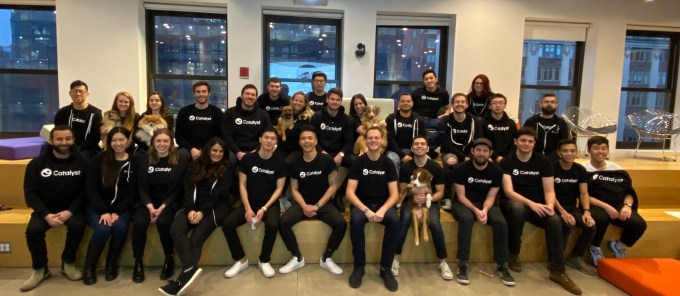
The Catalyst team. Photo via Catalyst.

When we last checked in with the company, Catalyst had 19 employees and was targeting 40 employees by July 2020. Chiu said that Catalyst is already at 35 employees, and will likely hit 60 to 70 employees by the end of the year.


from Startups – TechCrunch https://ift.tt/3bMbCAu
via IFTTT

Tecton.ai emerges from stealth with $20M Series A to build machine learning platform

Three former Uber engineers, who helped build the company’s Michelangelo machine learning platform, left the company last year to form Tecton.ai and build an operational machine learning platform for everyone else. Today the company announced a $20 million Series A from a couple of high-profile investors.

Andreessen Horowitz and Sequoia Capital co-led the round with Martin Casado, general partner at a16z and Matt Miller, partner at Sequoia joining the company board under the terms of the agreement. Today’s investment combined with the seed they used to spend the last year building the product comes to $25 million. Not bad in today’s environment.

But when you have the pedigree of these three founders — CEO Mike Del Balso, CTO Kevin Stumpf and VP of Engineering Jeremy Hermann all helped build the Uber system —  investors will spend some money, especially when you are trying to solve a difficult problem around machine learning.

The Michelangelo system was the machine learning platform at Uber that looked at things like driver safety, estimated arrival time and fraud detection, among other things. The three founders wanted to take what they had learned at Uber and put it to work for companies struggling with machine learning.

“What Tecton is really about is helping organizations make it really easy to build production-level machine learning systems, and put them in production and operate them correctly. And we focus on the data layer of machine learning,” CEO Del Balso told TechCrunch.

Image Credit: Tecton.ai

Del Balso says part of the problem, even for companies that are machine learning-savvy, is building and reusing models across different use cases. In fact, he says the vast majority of machine learning projects out there are failing, and Tecton wanted to give these companies the tools to change that.

The company has come up with a solution to make it much easier to create a model and put it to work by connecting to data sources, making it easier to reuse the data and the models across related use cases. “We’re focused on the data tasks related to machine learning, and all the data pipelines that are related to power those models,” Del Balso said.

Certainly Martin Casado from a16z sees a problem in search of a solution and he likes the background of this team and its understanding of building a system like this at scale. “After tracking a number of deep engagements with top ML teams and their interest in what Tecton was building, we invested in Tecton’s A alongside Sequoia. We strongly believe that these systems will continue to increasingly rely on data and ML models, and an entirely new tool chain is needed to aid in developing them…,” he wrote in a blog post announcing the funding.

The company currently has 17 employees and is looking to hire, particularly data scientists and machine learning engineers, with a goal of 30 employees by the end of the year.

While Del Balso is certainly cognizant of the current economic situation, he believes he can still build this company because he’s solving a problem that people genuinely are looking for help with right now around machine learning.

“From the customers we’re talking to, they need to solve these problems, and so we don’t see things slowing down,” he said.


from Startups – TechCrunch https://ift.tt/2W5u7ZX
via IFTTT