Thursday, 28 March 2019

Startup branding: how much does it really cost?

[Editor’s note: This article is a part of our latest initiative to demystify design and find the best brand designers and agencies in the world who work with early-stage companies — nominate a talented brand designer you’ve worked with.]

A brand is far more than logos and colors. A consistent brand identity not only communicates your company’s purpose and values to customers, but it also shapes your product development cycle and corporate culture. A branding project can help you figure out what and how to communicate your company’s story, but how much does it cost?

I’ve been a designer for over a decade (and a marketer before that), working with organizations ranging from tiny startups to the Fortune 500; this piece will give you a general idea of branding costs, with the knowledge that these broad numbers may not be applicable in every single case (in fact, you’re likely to find exceptions).

Bootstrappers and pre-seed startups

For most startups at this stage, your goal is to establish a proof of concept that can show product/market fit and bring investor dollars. You may only need a logo, website, and basic brand positioning. Isla Murray, Creative Director and Cofounder at Lama Six, also recommends investing your money in designing a beautiful deck: “It will set you apart and allow your message to shine through.”

Brand strategy and positioning

Positioning involves understanding who you are as a company, how your product fits the marketplace, and how you communicate your company’s values. This is the most important piece of the branding puzzle and one that’s worthwhile to begin on your own – when you have more funding, your original strategy work will give you a base for conveying your identity to professionals who can take it further. Two suggestions that designers commonly recommend are Positioning: The Battle for Your Mind by Al Ries and Jack Trout and Designing Brand Identity by Alina Wheeler, a primer on brand design.

Approximate cost: Your time.

Logo and visual identity

A brand is a relationship with your audience, and you’ll want to make sure that every interaction with them communicates your message. You’ll almost certainly need to hire a designer for this work. Sites like Fiverr and 99designs offer cheap logos, but independent consultants like Pablo Defendini advise that if you can find a small budget, you’ll get far better results by hiring an experienced professional to create a more polished logo and simple usage guide.

Approximate cost: $100-$3000.

Website

As a UX designer and front-end developer, I often recommend that young companies not spend their limited dollars on building a website from scratch – pre-built, templated websites like Squarespace can get you up and running for minimal cost, and you can buy domain names from a registrar like Namecheap. Customizations will be minimal, but you can’t beat the price.

Approximate cost: $10-30/month, plus $20/year per domain.

Early-stage, funded startups

Once you’re paying for experienced help, finding a good fit with a designer is crucial: Trust is the most important factor in a designer-client relationship, and design is ultimately a collaborative process. So take the time to find a contractor or firm that you respect and feel comfortable with.

Another option: If you already have a strong designer in-house, you might consider setting aside time for them to focus on your brand identity — they’ll cost less, and they already have intimate knowledge of your company values and audience.

Pricing comes in a wide range depending on your needs: Defindini says he’s worked on identity projects ranging from $5000 for a standalone logo to $200,000 for a complex identity system with multiple brands. Costs are also driven by scope and time. When you receive proposals from firms, be clear about your needs and transparent about what you can afford. Murray says that if clients don’t have a full budget, she’ll look for ways to scope down projects, which might involve reducing deliverables or going through fewer rounds of feedback and iteration.

Many designers will charge project rates, but if you’re paying by the hour, expect to spend $100-$150/hour for an experienced consultant and $150-$600/hour for a firm depending on their size and location.

Brand strategy and positioning

Brand strategy and positioning should drive most of your business decisions, so it’s worth taking the time to do this right. With a smaller budget, a consultant might spend a few days with your company leadership figuring out your core values and how to articulate them. For a larger budget, expect design teams to do more research and a competitive analysis, resulting in deliverables like a communication strategy and voice/tone guidelines for your marketing team.

More expensive projects may also include things like trainings to make sure your staff correctly and consistently implements your brand. In general, pricing is determined by how many people are working on your branding project and the complexity of your deliverables.

Approximate cost: $5000-$20,000 (freelancers and small firms), $30,000-$80,000 (large firms).

Logo and visual identity

Visual identity is the result of independent research, visual moodboarding, and rounds of feedback and iteration, says Murray. At the end of the process, you’ll typically receive a logo, typeface, color and design elements, and visual brand attributes. Larger-budget projects will typically involve detailed guidance on specific illustration and photography styles, iconography, and more – Murray suggests also including social media visual strategy and Instagram post templates.

Pricing here increases the more logo variations you need, the more brands you have, and the level of detail required in your visual guidance. Rounds of feedback and iteration add cost, as does the size of the team you hire.

Approximate cost: $5000-$15,000 (freelancers and small firms), $15,000-$75,000 (large firms).

Website

This is the branding piece with the greatest variability in cost, with projects getting more expensive as they require more user research, prototyping, content creation, and engineering work. Pricing is largely dependent on the complexity of engineering requirements and the number of iterations you want to go through.

Generally, you have static marketing sites on the lower end, websites built on lightweight content management systems (i.e. a custom visual design built to run on WordPress) in the middle, and web applications managing heavy databases or a more robust CMS like Sitecore or Drupal on the higher end.

Approximate cost: $2000-$20,000 (freelancers and small firms), $30,000-$200,000 (large firms).

Company name development – for more mature startups

Many startups find themselves at a stage where they’re well-funded but have a name that no longer fits – what feels right when your company is a month old and bootstrapped with your savings account may not feel the same two years later. A naming agency will develop names that work with your brand positioning, do a competitive analysis to research the tone, strength, and messaging of these names, and pre-screen them for trademark availability. (Note that you’ll typically need to hire a legal team to register the trademark once this is done.)

Approximate cost: $15,000-$75,000 (naming firm).

There’s no one-size-fits-all solution

You may hire one of the top branding agencies in the world or you may have a family member who’s an experienced designer and willing to give you an incredible deal. But no matter who you choose to work with, branding is a vital part of your business that will help you both understand and communicate who you are.


from Startups – TechCrunch https://ift.tt/2FyN5jm
via IFTTT

Atom Tickets to challenge MoviePass with a subscription ticket platform for theaters

MoviePass may still be trying to figure out how to make a movie ticket subscription service financially viable, but it can be credited for at least correctly identifying consumer demand for such a thing. There’s now a market for movie tickets by subscription from it as well as rivals like Sinemia, AMC Stubs A-List, Cinemark Movie Club, and — as of yesterday — newcomer Infinity. Now you can add one more: Atom Tickets, which is today announcing a platform that will allow theaters to build their own movie ticket subscription services.

The idea here is that the exhibitors themselves — not startups — should be involved in establishing the business model that’s right for them. Atom Tickets will instead provide the underlying technology and support that makes such a thing possible.

The new platform, called Atom Movie Access, will be offered to exhibitors across North America. It provides a fully digitally booking platform for subscribers through the Atom Tickets app. That means subscribers can also take advantage of Atom Tickets’ other benefits — like reserving seats in advance, inviting friends through their contacts, pre-ordering concessions for quick pickup where available and checking in using a phone instead of paper tickets.

On the back end, Atom Tickets will also handle the payment processing, customer service, fraud detection and anti-abuse measures. The latter is particularly important for movie ticket subscriptions, as MoviePass noted that as much as 20 percent of its customers were abusing the service, which significantly contributed to its financial issues.

In addition, the platform will allow subscribers to be able to make complex transactions in-app, like redeeming a free movie while also buying full-priced tickets for a guest in one sale. It also supports things like being able to choose between an included free screening or saving it for later, the company says, and allows for the creation of differently tiered plans. For example, there can be plans for both individuals or groups and tiers for standard and premium movie formats.

“Atom Tickets is an innovative ticketing platform that enables exhibitors to reach and engage new and incremental audiences,” said Matthew Bakal, chairman and co-founder of Atom Tickets, in a statement about the launch. “We’ve always believed in being a valuable partner to exhibitors, starting with the core functionality of our app, which allows for marketing promotions at specific locations, integrating exhibitor loyalty plans and giving customers the ability to pre-order concessions. Now with Atom Movie Access, we’re thrilled to provide the technology that will enhance the direct-to-consumer relationship of moviegoers with their favorite theaters.”

There are still several unknowns about the new platform — most notably the pricing for exhibitors. In an interview with Variety, Bakal suggested it would not be prohibitive as Atom Tickets would instead take a cut of subscriptions. The report also noted that no theaters have signed up yet, but the pitching will begin in earnest at a trade show next week in Las Vegas.


from Startups – TechCrunch https://ift.tt/2JLPeO3
via IFTTT

Moolah Mobile partners with Surge to offer free mobile service with ads

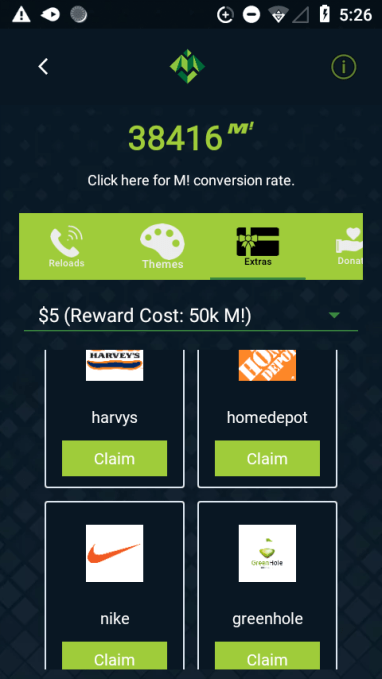
Moolah Mobile is teaming up with SurgePhone Wireless to offer people a new way to pay their cell phone bills — by putting ads on their homescreens.

Moolah CEO Vernell Woods (pictured above) said the startup has already been offering gift cards and other rewards to users who view its homescreen ads. So this is a similar model, except instead of leading to gift cards, the ads are subsidizing cell phone service from Surge.

The ads show up on users’ homescreen during all those interstitial moments between using apps, so the goal is to offer free service without consumers having to change their behavior. Woods said all that ad time adds up, with “the average person who’s using their phone on a consistent basis” viewing “easily between two to three hours” of home screen ads each day. And that’s enough to pay for the “equivalent” of Surge’s $10 monthly plan.

On the other hand, if for some reason a subscriber isn’t hitting the necessary total, Woods said they can also earn more points by accepting offers or taking surveys.

Moolah isn’t the only company using advertising to make previously paid products free. Just last week, I wrote about PreShow, a startup promising a free movie ticket for watching 15 to 20 minutes of ads. (Not everyone was crazy about the idea.)

Moolah Mobile screenshot

Moolah Mobile screenshot

But Woods said he’s doing this because he wants to make wireless service more affordable to people in low-income communities. In the announcement, Moolah investor Tip “T.I.” Harris said it’s “one of the few tech companies I’ve seen who truly want to help everyday people have access to technology.”

But could this also be seen as a way to harvest personal data from a vulnerable population? Woods said he wants to protect against that with a blockchain initiative set to launch this fall, allowing users to see exactly what data is being shared with advertisers.

“No personal information should be going to advertisers without users knowing about it,” he said, adding that companies “definitely should not be making money off” personal data without giving users a cut of the profits.

The subsidized wireless service should be available on Surge Volt Android devices with Moolah install kits, as well as on SIM Starter Kits distributed by Surge. Moolah and Surge said they will roll this out Florida, Virginia, Georgia and Texas initially, with an aim of reaching 40,000 locations by the end of the year.


from Startups – TechCrunch https://ift.tt/2uy750D
via IFTTT

Forge acquires IRA Services to expand offering for private company shares

Forge, the marketplace for trading private company shares formerly known as Equidate, announced that it will be acquiring custodial trust company IRA Services for a purchase price of $55 million.

IRA Services is a trust company that provides custodial services for retirement accounts managed by individuals and mid-to-large sized Institutions. Stripped of financial jargon, the primary function of a custodian is to hold on to (or maintain “custody” of) its clients’ securities and keep them safe from potential external complications such as theft or otherwise.

Many custodians, like IRA Services, also provide administrative services such as collecting the actual dividend payments made to the owner of a stock, and advisory services such as helping clients understand what they can and should invest in.

Since its founding in 2014, Forge has been one of the primary marketplaces where employees and early investors of leading startups can monetize privately-held shares without having to wait years for an IPO, exit or liquidity event.

Forge also creates value by providing some of the world’s leading private equity and institutional investors with high-demand access to some of the top pre-IPO companies, having worked with companies like Spotify, Airbnb and others.

By acquiring IRA Services, Forge can expand its support offerings for private market securities, and more importantly, can move closer to becoming a one-stop shop for private market investors who will no longer have to transfer shares acquired with Forge to an external custodial trust.

“Investors across asset classes want the ease, transparency, and security provided by a seamless investing experience from trading through to settlement to custody,” said IRA Services president Patrick Hughes. “In bringing together Forge and IRA Services, we look to deliver an unparalleled end-to-end investing experience for private markets investors.”

What differentiates IRA Services from other custody providers, and what makes the company particularly attractive to Forge, is that it specialized in deals involving alternative and non-traded asset classes. As a result, the company already maintains systems and workflows that are structured to deal with private securities and associated complexities.

Additionally, IRA Services’ API, which automates and supports the process of connecting custody accounts directly to investment platforms, is becoming increasingly valuable as the exchange market for private company shares, as well as average transaction size and volume, continues to swell.

Pending necessary agency approvals, the combined entity also intends to become both a registered broker-dealer and separate non-fiduciary trust company, meaning the company will be able to provide custodial services for clients even when they’re investing in assets outside of the Forge platform.

Satisfying growing needs of a budding market

The acquisition fits squarely into Forge’s long-term vision of being a leading institution in the rapidly growing private markets. “We believe that the private markets are where innovation is happening and there needs to be an institution that provides services that enable that whole ecosystem,” Forge CEO Kelly Rodriques said in a conversation with TechCrunch.

Rodriques believes that creating secure and transparent custody services for private market securities can provide millions of new investors with access to a space that is currently limited to around 400,000 private equity players, early-stage investors and early employees.

In Rodriques’ view, broadening the marketplace to more investors creates serious network effects and a significant positive flywheel. Having more participating private company investors creates more liquidity, which not only entices other investors to play in the space but also attracts more private companies to partner with Forge and provide access to their shares.

At the same time, innovative startups are continuing to grow larger in size, with more than 250 private companies around the world boasting valuations of $1 billion or greater. Companies are also opting to stay private for longer due to the growing availability of late-stage capital, the desire to operate strategically without the scrutiny of the public markets and quarterly performance requirements, or otherwise.

As a result, locating sources of secure daily liquidity is becoming a bigger need for more private companies. Forge believes that with its growing set of offerings and the credibility it has earned from working with key regulators and several of the world’s largest financial institutions, Forge is well-positioned to be the go-to solution for secondary market investors and companies alike.

“Our long-term hope is that our technology will be used to make the private market ecosystem stable, safe and sound,” Rodriques told TechCrunch.

The near-term outlook for Forge doesn’t look too bad either. Forge almost doubled its trading volume in 2018, surpassing just shy of $2 billion worth of transactions, with the company expecting another billion dollars in transactions by the end of the year.

As with any large acquisition, particularly in the financial services sector and particularly in the US, the companies will have to receive the requisite regulatory approvals to complete the deal in full. While the companies haven’t expressed an official expected close date for the deal, Forge expects the regulatory process will take anywhere from two-to-four months.

Forge will go through yet another name change once the deal closes. The combined entity will go by the name Forge Trust to better reflect the custodial services gained through IRA Services and the new company’s full suite of capabilities. Additionally, IRA Services CEO, Edwin Blue, will retire from the company, though current IRA Services employees will continue to operate from the firm’s existing offices.

To date, Forge has raised around $88.5 million in venture capital, according to data from Crunchbase, with backing from a number of Silicon Valley heavy hitters including Peter Thiel, Tim Draper, Scott Bannister, Charlie Cheever, and others.


from Startups – TechCrunch https://ift.tt/2HKe5Qp
via IFTTT

Kong raises $43M Series C for its API platform

Kong, the open core API management and lifecycle management company previously known as Mashape, today announced that it has raised a $43 million Series C round led by Index Ventures. Previous investors Andreessen Horowitz and Charles River Ventures (CRV), as well as new investors GGV Capital and World Innovation Lab also participated. With this round, Kong has now raised a total of $71 million.

The company’s CEO and co-founder Augusto Marietti tells me that the company plans to use the funds to build out its service control platform. He likened this service to the “nervous system for an organization’s software architecture.”

Right now, Kong is just offering the first pieces of this, though. One area the company plans to especially focus on is security, in addition to its existing management tools, where Kong plans to add more machine learning capabilities over time, too. “It’s obviously a 10-year journey but those two things — immunity with security and machine learning with [Kong] Brain are really a 10-year journey of building an intelligent platform that can manage all the traffic in and out of an organization,” he said.

In addition, the company also plans to invest heavily in its expansion in both Europe and the Asia Pacific market. This also explains the addition of World Innovation Lab as an investor. The firm, after all, focuses heavily on connecting companies in the US with partners in Asia — and especially Japan. As Marietti told me, the company is seeing a lot of demand in Japan and China right now, so it makes sense to capitalize on this, especially as the Chinese market is about to become more easily accessible for foreign companies.

Kong notes that it doubled its headcount in 2018 and now has over 100 enterprise customers, including Yahoo! Japan, Ferrari, SoulCycle and WeWork.

It’s worth noting that while this is officially a Series C investment, Marietti is thinking of it more like a Series B round given that the company went through a major pivot when it moved from being Mashape to its focus on Kong, which was already its most popular open source tool.

“Modern software is now built in the cloud, with applications consuming other applications, service to service,” said Martin Casado, general partner at Andreessen Horowitz. “We’re at the tipping point of enterprise adoption of microservices architectures, and companies are turning to new open source-based developer tools and platforms to fuel their next wave of innovation. Kong is uniquely suited to help enterprises as they make this shift by supporting an organization’s entire service architecture, from centralized or decentralized, monolith or microservices.”


from Startups – TechCrunch https://ift.tt/2TI8MTn
via IFTTT

Microsoft gives 500 patents to startups

Microsoft today announced a major expansion of its Azure IP Advantage program, which provides its Azure users with protection against patent trolls. This program now also provides customers who are building IoT solutions that connect to Azure with access to 10,000 patents to defend themselves against intellectual property lawsuits.

What’s maybe most interesting here, though, is that Microsoft is also donating 500 patents to startups in the LOT Network. This organization, which counts companies like Amazon, Facebook, Google, Microsoft, Netflix, SAP, Epic Games, Ford, GM, Lyft and Uber among its well over 150 members, is designed to protect companies against patent trolls by giving them access to a wide library of patents from its member companies and other sources.

“The LOT Network is really committed to helping address the proliferation of intellectual property losses, especially ones that are brought by non-practicing entities, or so-called trolls,” Microsoft  CVP and Deputy General Counsel Erich Andersen told me. 

This new program goes well beyond basic protection from patent trolls, though. Qualified startups who join the LOT Network can acquire Microsoft patents as part of their free membership and as Andresen stressed, the startups will own them outright. The LOT network will be able to provide its startup members with up to three patents from this collection.

There’s one additional requirement here, though: to qualify for getting the patents, these startups also have to meet a $1,000 per month Azure spend. As Andersen told me, though, they don’t have to make any kind of forward pledge. The company will simply look at a startup’s last three monthly Azure bills.

“We want to help the LOT Network grow its network of startups,” Andersen said. “To provide an incentive, we are going to provide these patents to them.” He noted that startups are obviously interested in getting access to patents as a foundation of their companies, but also to raise capital and to defend themselves against trolls.

The patents we’re talking about here cover a wide range of technologies as well as geographies. Andersen noted that we’re talking about U.S. patents as well as European and Chinese patents, for example.

“The idea is that these startups come from a diverse set of industry sectors,” he said. “The hope we have is that when they approach LOT, they’ll find patents among those 500 that are going to be interesting to basically almost any company that might want a foundational set of patents for their business.”

As for the extended Azure IP Advantage program, it’s worth noting that every Azure customer who spends more than $1,000 per month over the past three months and hasn’t filed a patent infringement lawsuit against another Azure customers in the last two years can automatically pick one of the patents in the program’s portfolio to protect itself against frivolous patent lawsuits from trolls (and that’s a different library of patents from the one Microsoft is donating to the LOT Network as part of the startup program).

As Andresen noted, the team looked at how it could enhance the IP program by focusing on a number of specific areas. Microsoft is obviously investing a lot into IoT, so extending the program to this area makes sense. “What we’re basically saying is that if the customer is using IoT technology — regardless of whether it’s Microsoft technology or not — and it’s connected to Azure, then we’re going to provide this patent pick right to help customers defend themselves against patent suits,” Andersen said.

In addition, for those who do choose to use Microsoft IoT technology across the board, Microsoft will provide indemnification, too.

Patent trolls have lately started acquiring IoT patents, so chances are they are getting ready to making use of them and that we’ll see quite a bit of patent litigation in this space in the future. “The early signs we’re seeing indicate that this is something that customers are going to care about in the future,” said Andersen.


from Startups – TechCrunch https://ift.tt/2Wtpg3c
via IFTTT

Mattress startup Casper said to be valued at $1.1B with new funding

Direct-to-consumer mattress business Casper has secured a $100 million Series D investment from existing investors Target, NEA and Norwest Venture Partners.

The fresh infusion of capital values Casper at $1.1 billion, Bloomberg reports. We’ve reached out to Casper to confirm the numbers.

Casper posted $373 million in net revenue in 2018, according to leaked financials published by The Information this week. The company, of course, isn’t profitable, with losses reaching $64 million last year. According to its projections, Casper will become profitable on an EBITDA basis in 2019 and is expecting revenues of $556 million this year.

Casper has previously raised $240 million in equity funding from celebrity investors Leonardo DiCaprio and 50 Cent, as well as institutional investors Lerer Hippeau and IVP.

Founded in 2014, the New York business will use the latest investment to expand overseas and open additional brick-and-mortar stores. Competing with other well-funded startups in the business of sleep, like the publicly traded Purple and the VC-backed Leesa Sleep, Casper has taken to physical retail to augment its following. The company opened its first store in New York City in 2018 and has detailed additional plans to open another 200 stores.

An initial public offering is likely the next step for the sleep products retailer, which sells pillows and an $89 sleep-friendly light, in addition to mattresses. Per a recent Reuters report, Casper is in the process of hiring underwriters for its IPO.


from Startups – TechCrunch https://ift.tt/2JHrydH
via IFTTT