Wednesday, 27 June 2018

Peloton acquires music startup Neurotic Media

Peloton, the unicorn spin (and now treadmill) business that lets users work out via livestreamed classes, has today announced its first acquisition. The company acquired Neurotic Media, a B2B music aggregation and streaming service.

Atlanta-based Neurotic Media was founded in 2001 by Shachar “Shac” Oren, who will become a VP at Peloton serving under Peloton’s Head of Music Paul DeGooyer. The entire Neurotic Media team and offices will remain in Atlanta, continuing operations as a standalone subsidiary serving third-party clients.

Neurotic Media is a white-label distribution and marketing platform, helping brands to influence and engage customers via popular music. Essentially, the company connects a brand with a certain popular song or songs that align with their brand mission.

The idea here is that music is integral to working out. Given Peloton’s focus on bringing a high-quality workout to the comfort of a user’s home (or one of their studios), music plays a big role. But one doesn’t often dabble in the music industry without either 1. experience or 2. loads of money. While Peloton has plenty of cash to go around, Neurotic brings nearly two decades of experience to the Peloton portfolio.

Here’s what DeGooyer had to say in a prepared statement:

Our Members have embraced music as central to the Peloton experience and consistently rank it as one of the top aspects of the brand. The addition of Shac and his amazing team to the Peloton family will help us rapidly deploy new music features we know our Members want, along with some unique innovations we think they’ll love.

Peloton has been making moves as of late. The company launched an expanded iOS app called Peloton Digital, and has announced plans to expand into the UK and Canada starting in Fall. Plus, Peloton opened a new Tread studio in NYC, with plans to open a massive multi-studio space on the West Side of Manhattan next year.

Peloton was founded in 2012 and has raised a total of $444.7 million. The terms of the deal were not disclosed.


from Startups – TechCrunch https://ift.tt/2KmrPlk
via IFTTT

Codefresh raises $8M Series B round for its container-centric CI/CD platform

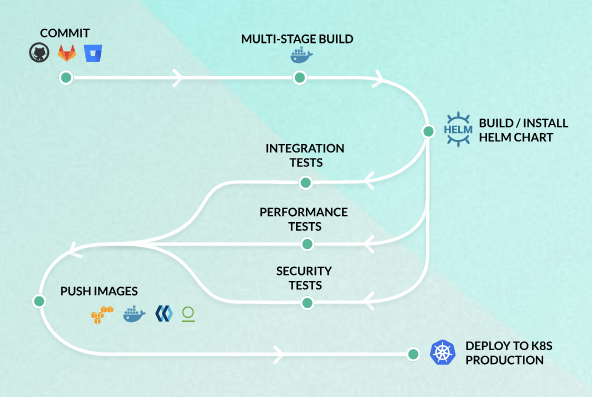
Codefresh, a continuous integration and delivery platform built for the Kubernetes container ecosystem, today announced that it has raised an $8 million Series B round led by M12, Microsoft’s venture fund. Viola Ventures, Hillsven and CEIF also participated in this round, which brings the company’s total funding to $15.1 million.

In a market where there are seemingly more CI/CD platforms every day, Codefresh sets itself apart thanks to its focus on Kubernetes, which is now essentially the de facto standard for container orchestration services and which is seeing a rapid growth in adoption. The service promises that it can help developers to automate their application deployments to Kubernetes and that teams will see “up to 24X faster development times.” That number seems a bit optimistic, but the whole point of adoption Kubernetes and CI/CD is obviously to speed up the development and deployment process.

“The meteoric rise of Kubernetes is happening so fast that most toolchains haven’t kept up, and M12 knows it,” said Raziel Tabib, Codefresh co-founder and CEO. “With this latest round of funding we’re going to aggressively accelerate our roadmap and expand our customer base.”

The Codefresh platform hit general availability in 2017 and the company currently claims about 20,000 users, including the likes Giphy.


from Startups – TechCrunch https://ift.tt/2KkY5Wb
via IFTTT

Tuesday, 26 June 2018

Mike Judge to join us at Disrupt SF 2018

Silicon Valley, for better and oftentimes worse, provides an uncanny valley view of the ups and downs of IRL Silicon Valley.

The HBO series has shown what it’s like to deal with an incumbent who steals an idea or IP, the humiliation of saving the day, only to be fired as CEO by your VC, or the fear and exhilaration of competing on the Startup Battlefield stage — a familiar spot for those who have been to Disrupt.

TechCrunch is helping create another Silicon Valley meta moment. Silicon Valley co-creator Mike Judge will join us on stage at TC Disrupt SF.

Interestingly, Judge joined a team from HBO at Disrupt well before Silicon Valley ever aired, doing research for the then-forthcoming series. And, of course, Season 1 ended with the Startup Battlefield stage.

The cycle continued in 2016, when Judge came on stage to discuss what it’s like to parody Silicon Valley culture.

And round and round we go.

Judge has been in the entertainment industry for a long time, creating Beavis and Butt-head, co-creating King of the Hill, and serving as writer and director for classic films like Office Space and Idiocracy.

As Silicon Valley heads into its sixth season, we’re excited to chat with Judge about the direction of the show and the evolution of the media industry as a whole.

And hey, maybe we’ll hear a few spoilers for the upcoming season.

Tickets to the Disrupt SF 2018 are available right here.


from Startups – TechCrunch https://ift.tt/2ItwOvw
via IFTTT

b8ta raises $19 million Series B led by Macy’s

b8ta, the retail-as-a-service startup, has closed a $19 million Series B round led by Macy’s with participation from Sound Ventures, Palm Drive Capital, Capitaland, Graphene Ventures, Khosla Ventures and Plug and Play Ventures. This round brings b8ta’s total funding to $39 million.

Macy’s decision to lead this round comes in light of its recent partnership with b8ta to enhance the retailer’s experiential-based concept called The Market. Macy’s is also expanding its partnership with b8ta to launch The Market in a larger space, entirely powered by Built by b8ta, which functions as a retail-as-a-service platform for brands that want a physical presence. b8ta’s software solution includes checkout, inventory, point of sale, inventory management, staff scheduling services and more.

“Testing a shop with them in their store and having really good success made us feel bullish that this model would work well for them,” b8ta CEO Vibhu Norby told TechCrunch.

To the outsider, there’s this idea that Macy’s is struggling — in light of a bunch of store closures. That was a conversation b8ta had internally, Norby said.

“As an example, our board was initially not certain we should do something with them but I felt like it was worth a shot,” Norby told me. “For us to get comfortable, we spent a lot of time trying to understand their business. What we found was that perception in the media didn’t really meet the reality for us. The reality is Macy’s is one of the most important companies in the country.”

Macy’s, Norby said, is also one of the largest real estate company’s in the world and owns “so much real estate in all of the best places.”

He added, “it’s not that retail itself is dying, it’s just that it’s changing. The way people want to shop is changing and we have a shared alignment on bringing that next generation of a company into the space.”

In addition to the expanded partnership with Macy’s, b8ta is opening up new flagship stores in Chicago and Tysons Corner, Va. b8ta currently has more than 78 flagship stores across the country to let consumers experience tech gadgets in real life.


from Startups – TechCrunch https://ift.tt/2yHO94r
via IFTTT

Shone wants to automate container ships

While everybody is focused on self-driving cars, Shone is working on autonomous technologies for container ships. The startup doesn’t want to turn those giant ships into unmanned vehicles, but it wants to help seafarers and make ships more efficient.

After attending Y Combinator, Shone recently raised a $4 million round from Alven, Liquid 2, Paul Graham, David Marcus and D. Scott Phoenix.

“The basic idea is that autonomous ships are coming. Overall, it seems unavoidable,” co-founder and CEO Ugo Vollmer told me. “And yet, there are still 25 people on the boat and it runs on Windows.”

The team spent a lot of time talking with people working in the shipping industry to understand their needs. After traveling on container ships and buying a tiny boat for prototyping, Shone is already working with a shipping company to retrofit their ships with their technology.

“Our vision is that it’s going to happen progressively,” Vollmer said. “There will be a lot of navigation assistance systems first.”

At first, it could lead to fewer people on the boat. There are around 15 people maintaining the engine and the machinery. These people won’t go away any time soon. But there are also around ten people who are keeping an eye on the radar, on the different tools and also on the sea itself. They rotate as they need to have a small team in the cabin 24/7.

This second team could need some help, and this is where Shone shines. The startup adds a few sensors but mostly hooks their system to existing sensors. While there are a ton of sensors already, none of them communicate together.

Shone can combine all this data and analyze it to give some insights. Eventually, the startup plans to recommend different courses to save some fuel and time. Existing autopilot solutions on ships is more like cruise control in cars. You can follow a predetermined path, but you can’t say “let’s go from A to B”.

And saving fuel is key when it comes to global warning. Each ship carries a mountain of goods, so it’s quite efficient when you think about the impact of one ton of goods. But if you can make a container ship slightly more efficient, it would have a huge impact on the environment.

“If you can make a 1 percent optimization, you have a bigger impact than Tesla today,” Vollmer said. It’s hard to compare those two things as cars and ships are different beasts though.

For now, Shone is only focusing on deep sea. The crew doesn’t handle the first and last mile anyway as someone from the harbor usually comes on board to guide you to the dock.

Shone has signed a partnership with CMA CGM to collect data and add some hardware devices. It’s still early days for Shone as the company is first focusing on situational awareness before moving further into recommendations.


from Startups – TechCrunch https://ift.tt/2KlSewk
via IFTTT

Pared picks up $10M to help restaurant employees live an on-demand life

On the busiest nights, a restaurant can’t afford to even lose a dishwasher to getting sick or not being around — or simply ghosting on the company — and end up frustrating the whole experience for the rest of the staff and restaurant goers.

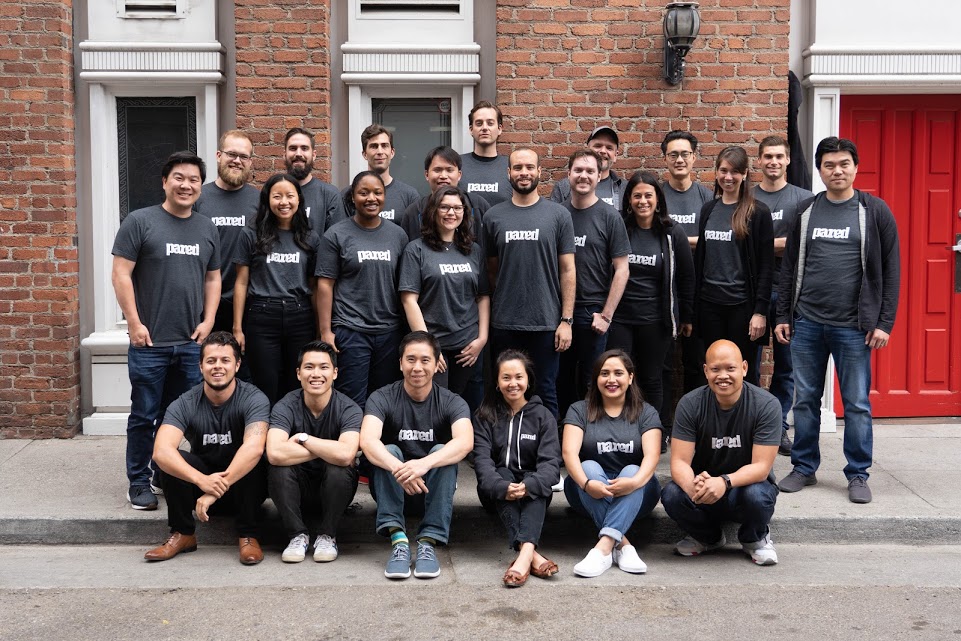
It’s a problem that Will Pacio was acutely familiar with during his time at Spice Kit, and it’s why he and Dave Lu — who didn’t really have much experience other than delivering Chinese food in high school, but wanted to get into the industry — started Pared. It essentially serves as an on-demand tool for restaurant workers, who might find themselves already working across multiple different jobs or multiple different restaurants and are looking for a lifestyle over which they have some more control. The company said it has raised a $10 million financing round led by CRV, with existing investors Uncork Capital and True Ventures also participating. CRV partner Saar Gur is joining the company’s board of directors.

“Even if I go [to Craigslist], it’ll take four to six weeks to get someone to show up,” Wu said. “You hire them, you train them, and then they don’t show up to work the very first day. Even if I paid overtime, I don’t have enough employees to cover the shifts. For [Pacio] it was a nightmare, and I just want to be able to tap an app to get that kid from Safeway across the street who knows how to make sandwiches and make them for me.”
The app largely focuses on back-of-the-house operations like line cooks, prep cooks, and dishwashers, though it could theoretically extend to any part of the restaurant experience. Restaurants go to the app and say they are looking for what the app calls a ‘Pro’ in whatever role they need, and are able to book the employee right away for the slot they have in their schedule. It might come at a slight premium over the typical hire, but restaurants are already willing to pay overtime in order to cover those gaps and keep things moving smoothly, Wu said.

For employees, it’s a pretty similar experience — they see a job posted on the app, with a time slot, and they make themselves available for an hourly wage. The second benefit, Wu said, is that they can start to slowly make a name for themselves if they are able to prove out their skills and move up the ranks at any of those restaurants. The culinary community is a small one, he said, and it offers a lot of room to start building up a reputation as an exceptional chef or just finally get a first shot at a sauté position in the kitchen after working at the back of the house. That, too, might be part of the appeal of jumping on a service like Pared rather than just driving for Uber.

“On our platform, every shift and rating you get, every connection you get in the industry — and it’s a very tight network — you build up your own reputation or identity,” Wu said. “We’re helping them build up, it’s more like a race to the top than a race to the bottom. They start off as a prep cook, and they start getting offers for line cook positions. We might have videos for learning to do this or that. They can work their way up to build that reputation. It’s all about reputation, it’s about people you trust.”

And like Uber, that flexibility is one of the more critical selling points of the application. A line cook might want to spend some time in New York to learn the scene there, and with an app like Pared, they can get access to some potential openings at restaurants in the area. As their experience — and their reputation — builds up over time, Wu hopes Pared gets known as a launching point for many careers, in addition to just offering restaurant workers a more flexible lifestyle.

There are certainly larger platforms that aren’t just targeting the restaurant ecosystem, and look to be a more global hub for hourly workers. Shiftgig, which raised $20 million last year, is one interpretation of that idea. But by offering a more curated and focused experience — one for which a kind of aspirational chef might keep gravitating back toward because they hope to one day end up running their own kitchen — can help build up that reputation for having a reliable workforce that any restaurant can use.


from Startups – TechCrunch https://ift.tt/2KaaHjF
via IFTTT

YC grad ZenProspect rebrands as Apollo, lands $7 M Series A

ZenProspect, a startup that emerged from the Y Combinator Winter 2016 class to help companies use data and intelligence to increase sales, announced today that it was rebranding as Apollo. It also announced a $7 million Series A investment.

The round was led by Nexus Venture Partners. Social Capital and Y Combinator also participated. Apparently Y Combinator liked what they saw enough to continue to invest in the company.

Apollo helps customers connect their sales people with the right person at the right time. That is typically a customer that is most likely to buy the product. It does this by combining a number of tools including a rules engine to automate prospect routing, a lead scoring tool and analytics to measure results at a granular level, among others.

The company also uses data they have collected from 200 million contacts at 10 million companies to match sellers to buyers along with the information in the user’s own CRM tools — typically Salesforce. Apollo is making this vast database of company and contact data available for customers to use themselves for free starting today.

Apollo CEO and founder Tim Zheng says the company was born out of a need at a previous venture. He was working at a startup that was floundering and sales had flatlined. When they couldn’t find a product on the market to help them, they decided to build it and saw the number of users increase from 5000 to 150,000 users in just five weeks. That eventually reached a million users.  As he spoke to friends at other Bay area companies about what his company had done, he heard a lot of interest, and decided to turn that sales tool into a company.

[gallery ids="1663275,1663276,1663277,1663278"]

The company launched as ZenProspect in 2015 and went through Y Combinator in 2016. They were the third fastest growing company in that YC batch, generating $1 million in annual recurring revenue (ARR) during their tenure. In fact, they were profitable out of the gate, using their own software to sell the product.

Zheng points out that there are thousands of sales tools out there, but he said, even if you bought every one of them and stitched them together you still wouldn’t have a great sales process. Zheng says his company has figured out how to solve that problem and provide that structure to deliver the best prospects to sales people to close deals.

The company works closely with Salesforce as 80 percent of its customers are using data inside of Salesforce in conjunction with the Apollo tool. It’s worth noting, however, that Apollo is not built on top of Salesforce platform. It just integrates with it.

They target both early stage startups looking to increase sales and established enterprise customers with huge sales teams. So far it’s been working. Today, Apollo has 500 customers and 50 employees. With the current influx of money, they expect to get to 120 in the next 12 -18 months.


from Startups – TechCrunch https://ift.tt/2IucolZ
via IFTTT