Thursday, 30 January 2020

With $30 million in fresh funds, The Bouqs plans to plant its flower delivery business in Japan

The Bouqs plans to take a slice of Japan’s $6 billion flower market this year with a $30 million strategic growth round from Japanese enterprise business investor Yamasa. While The Bouqs still must compete with bigger contenders like 1-800-Flowers and FTD in the U.S., it will now have to take on incumbents like Ayoma Flower Market and FloraJapan, both of which also offer same-day delivery throughout the land of the rising sun.

So why Japan? According to The Bouqs founder and CEO John Tabis, his company had been looking to expand internationally for awhile and Japan seemed to fit well within that plan.

The Bouqs CEO and founder John Tabis

The Bouqs CEO and founder John Tabis

And as far as bigger competition in any country, Tabis is undeterred, telling TechCrunch there’s plenty of opportunities in the flower delivery business if you know where to look. “There’ve been four or five other startups that tried something similar — some of them no longer exist,” Tabis said. “But the thing that’s worked for us, the first is the way that we’ve sourced is unique and it’s really the foundation of our brand.”

The Bouqs sprung up in a wave of Silicon Valley funded flower delivery startups like BloomThat, Farm Girl and  Urban Stems, all promising Pinterest-worthy bouquets at the click of a button. But what set it apart was its farm-direct supply chain, cutting out costs from middlemen and delivering flowers that last longer.

This particular round now puts The Bouqs up top as far as total funding raised among its flower delivery startup peers, bringing in $74 million in total funding to date, with competitor Urban Stems at a close second with $27 million in funding, according to Crunchbase.

Tabis also tells TechCrunch the new funds will also further the company’s development into brick-and-mortar stores and that it’s jumping into the wedding biz. As anyone who’s ever planned a wedding will tell you, it’s an industry ripe for disruption — with brides and grooms spending about 8% of the budget on the flowers alone.

One other renewed focus for the company will be its subscription business, keeping customers set up with a fresh bunch of flowers once the old bouquet is ready for tossing. “It’s sort of the linchpin of our business that’s grown very nicely…expanding both our revenue and profitability,” Tabis told TechCrunch.

The SVP of Yamasa, Norikazu Sano, also mentioned further expansion into Asia for the company in a company press release so we could see the Bouqs in more international areas over time, if all goes right in Japan.

“This financing will enable us to fully realize our vision to create a global network of top quality farms paired with a category-defining local floral brand enabled by proprietary supply chain technology and vertically-integrated sourcing capabilities. We’re so excited for this next phase of the business, and all of the opportunities that lie ahead,” Tabis said.


from Startups – TechCrunch https://ift.tt/2GB54qj
via IFTTT

One day left for early-bird tickets to TC Sessions: Robotics + AI 2020

No one ever wants to pay more, and that’s as true for well-financed companies as it is for early-stage startup founders on a shoe-string budget. So if you love robots and machine learning, why spend more on your ticket to TC Sessions: Robotics + AI 2020? Prices go up on January 31, which means you have just one day left to buy an early-bird ticket. You’ll save a tidy $150 in the process. Sweet!

On March 3, roughly 1,500 attendees will spend the day delving into the future of robots, the AI that drives them and the people at the forefront. We’re talking some of the top makers, visionaries, founders, investors and engineers. Join your community for live interviews, panel discussions, demos, workshops, audience/speaker Q&As and world-class networking.

We’ve posted the day’s agenda, and we’ll add a few more surprises in the coming weeks. Here’s a quick peek at just some of the engaging speakers and presentations you’ll enjoy.

  • Lending a Helping Robotic Hand: As populations age, caregivers in many countries are turning to robots for assistance. Vivian Chu, cofounder and CEO of Diligent Robotics, and Mike Dooley, cofounder and CEO of Labrador Systems, will join us to discuss the role technology can play in helping care for and assist those in need.
  • Fostering the Next Generation of Robotics Startups: Robotics and AI are the future of many or most industries, but the barrier of entry is still difficult to surmount for many startups. Joshua Wilson, co-founder and CEO of Freedom Robotics, joins us to talk about how these companies are helping ease the first steps into the wider world of automation.

In a classic “but wait, there’s more” moment, our Pitch Night finalists will present live on the Main Stage. Don’t know what we’re talking about? Read more about Pitch Night here, and hey — we’re accepting applications until February 1. Don’t wait — toss your hat into the ring. It’s free, and you’ll have a chance to introduce your early-stage startup to a group of heavy-hitting influencers. What’s not to love?

TC Sessions: Robotics + AI 2020 takes place on March 3. You have plenty of time to plan the day, but your opportunity to save $150 runs out in one short day. Prices go up on January 31 — buy your early-bird ticket today.

Is your company interested in sponsoring or exhibiting at TC Sessions: Robotics & AI 2020? Contact our sponsorship sales team by filling out this form.


from Startups – TechCrunch https://ift.tt/3182stk
via IFTTT

SoftBank wants its on-demand portfolio to stop losing so much money

SoftBank wants its competing portfolio companies to stop losing so much money and, in some cases, to merge.

That’s the news out from the Financial Times today, which reported that Uber and DoorDash discussed merging last year. The talks didn’t wind up in a deal.

The two companies, each heavily backed by SoftBank and its formerly active Vision Fund, compete in the food delivery space at great expense. Uber’s Eats business turned $392 million in adjusted net revenue in Q3 2019 into $316 million adjusted loss. That ocean of red ink actually makes DoorDash’s reported, projected $450 million 2019 operating loss look modest.

Perhaps by bringing the two companies together they would lose less money, and thus be in a better place to either return to their original IPO valuation or defend their existing private valuation.

Uber has famously struggled after its IPO to retain value, shedding worth during its public offering and since its debut. DoorDash, relatedly, was said to be in the market recently but unable to close a new, large funding round. And as the two companies compete a combination makes sense. Even more so when you consider their shared shareholder.

Other chaos

Uber and DoorDash aren’t the only examples of SoftBank-backed companies beating each other up with bricks of Vision Fund cash.

According to a report today in the Wall Street Journal, a fight in Latin America between several SoftBank-backed companies is raging:

Uber is under siege in Latin America amid a bruising price war where its ostensible rivals are Rappi and China’s Didi Chuxing Technology Co. But here’s the twist. All the combatants have as their biggest owner the same tech investor, Japan’s SoftBank Group Corp., which has injected a total of $20 billion into the three.

In the pre-unicorn era, you’ll recall the old venture maxim that no single group should invest in competing players. After all, why pay for one portfolio company to beat on another startup that you already helped finance? SoftBank, with its own investments and the Vision Fund, ignored that rule, and now it’s financing a fustercluck across the various American continents.

Which is why it might want DoorDash and Uber to link up. It might lessen one headache. Then SoftBank could work on figuring out how to keep Uber and Didi from beating each other up on rides in other markets, while disentangling Uber Eats and Rappi from a delivery scrap in yet more.

Perhaps SoftBank wants all the players to merge into a single, mega-delivery and ride corp. That would never pass regulatory oversight, of course, but at least it would centralize the losses and cash burn into a single income statement.

Think of the time it would save!


from Startups – TechCrunch https://ift.tt/37GrthX
via IFTTT

SpaceX cautions on launch regulation that outpaces innovation

During the Federal Aviation Administration (FAA)’s 23rd annual Commercial Space Transportation Conference in Washington, D.C., one panel focused on the changing regulatory environment when it comes to private launch activities, and how those are integrated into existing rules and practices for managing commercial air transportation. Panelist Caryn Schenewerk, SpaceX senior counsel and senior director of space flight policy, emphasized that while the company always does the utmost to ensure safety in everything it does, the company also wants to focus on the actual state of the industry today and what it needs to grow as various partners work to establish new rules for the growing commercial launch sector.

“When aviation started, the Wright brothers weren’t flying over major populated cities,” Schenewerk pointed out. “They were outside Paris in an unpopulated field, and they were at Kitty Hawk on unpopulated beaches. And they were in Ohio in unpopulated areas.”

Schenewerk was directly addressing comments made by other panelists, and specifically ALPA Aviation Safety Chair Steve Jangelis, that suggested the emerging commercial launch industries may be looking far ahead to when they’re launching from spaceports located near populated areas, and launching with much more frequency than they are today. In general Jangelis was advocating for laying the groundwork now for high levels of cooperation and integration between aviation traffic management and rocket launch operators.

Schenewerk was reluctant to concede any kind of direct equivalency between the commercial air transportation industry and the space launch sector, given their relative dissimilarity.

She noted that in terms of sheer volume, there’s a massive difference, with roughly 40 to 50 launches set for 2020 compared to millions of flights for commercial air. Airlines also use essentially the same small handful of airframes from suppliers like Boeing and Airbus, while each launch company has their own, very different vehicle with different conditions for launch and flight. Overall, she suggested then that anticipating some potential future state where the industries were more similar could result in stifling progress toward that ultimate goal.

“I hope we get to that million launches at some point, but when we are at that point, it’s going to be because we worked our way up the safety trajectory in a way that allows us to operate that way,” Schenewerk said. “Today, SpaceX can’t fly from a spaceport in the middle of the country, because we won’t get through the safety approval. We literally will not be licensed by the FAA to operate from that site, because we will then be flying over large populations of people – and we aren’t at that level of reliability and safety in this industry to fly over large populations of people with these kinds of rockets. Could we get there someday? Yeah, we can get there someday when we’ve had a million flights, and a million prove-outs of our capability, when we have such repeatability that we’re in that level.”

Ultimately, Schenewerk’s comments and Jangelis’ responses illustrate that there are still a lot of places where younger companies and emerging technologies like reusable rocket launches are conflicting with the views of more established industries and players operating in some shared spaces.

FAA Administrator Steve Dickson also addressed the agency’s ongoing work to establish launch rules, which were released as a draft last year and which Dickson said will likely be finalized sometime this fall, once the FAA has incorporated industry comments and feedback.

“Let’s think about that big vision, that big day when lots of things are happening,” Schenewerk said. “But let’s also not yell at our kid for not being able to fly an airplane when they can barely walk – and I think that’s where we are right now: We’re still figuring out how to walk and run in this industry.”


from Startups – TechCrunch https://ift.tt/3b57dsu
via IFTTT

How acquirers look at your company

There comes a time for many founders when they are ready to pass the baton of running their business to someone else. It’s a rare founder who wants to go from zero to running and scaling a large, long-term company. When that time comes — you may have expectations on what you would like to exit for, or have read stories about other company valuations — I thought it might be useful to share some of the other side’s viewpoint. So, here are some of the criteria we use at Scaleworks when evaluating a new opportunity.

Rule 1: Don’t lose money

The cliche is “rule number two: read rule number one.” Make sure any acquisition you consider is at a fair price and that you have identified some low-hanging fruit opportunities for improvement that you are confident in your ability to execute on.

What does a fair price mean?

For us, it means a price we have confidence we can either pay back over time from cash flow, or sell the business on a profit multiple for at least the same price we bought it for.


from Startups – TechCrunch https://ift.tt/3aPCMGB
via IFTTT

The don’ts of debt for fast-growing startups

I work every day with company founders who are grappling with the challenges of driving business growth while keeping their finances on an even keel. One topic we often discuss is how to take advantage of debt to drive business growth — without it turning into a problem.

In my experience, debt can serve as a valuable piece of a company’s capital structure. The key is to use debt for the right purposes and to understand the implications of doing so. For example, short-term loans (one to two-year terms) are useful for financing receivables and inventory to help manage cash flow. These working capital facilities have attractive interest rates (often in the 5% range) and are well understood by the lending community.

By contrast, mezzanine loans (usually three to five-year terms) are better suited to provide the flexibility and runway needed to prove out certain initiatives prior to securing an equity investment or a liquidity event. These loans tend to have limited covenants, are not secured by specific working capital assets and are junior to the working capital loans. Given their higher-risk profile, they are more expensive than short-term loans, with lenders typically targeting a return of 15% to 20%, split between a current pay interest rate of 10%+ and expected stock appreciation from the receipt of warrant coverage.

Regardless of the type of debt a company takes on, there are certain principles to consider to keep the debt from threatening the success of the business. Should you decide to take on debt, understand the implications and consider the following five rules:


from Startups – TechCrunch https://ift.tt/2vAHVlF
via IFTTT

OpsRamp raises $37.5M for its hybrid IT operations platform

OpsRamp, a service that helps IT teams discover, monitor, manage and — maybe most importantly — automate their hybrid environments, today announced that it has closed a $37.5 million funding round led by Morgan Stanley Expansion Capital, with participation from existing investor Sapphire Ventures and new investor Hewlett Packard Enterprise.

OpsRamp last raised funding in 2017, when Sapphire led its $20 million Series A round.

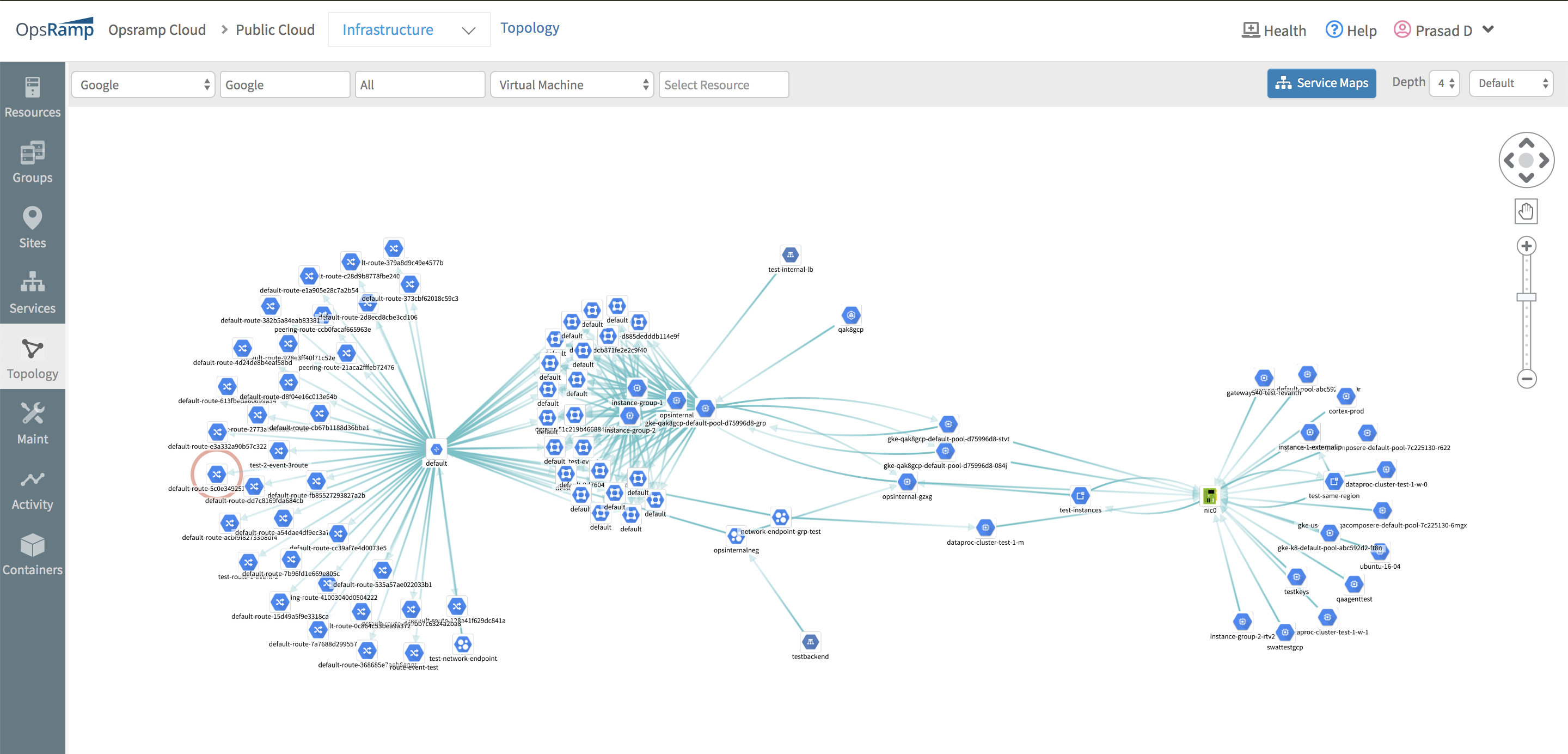
At the core of OpsRamp’s services is its AIOps platform. Using machine learning and other techniques, this service aims to help IT teams manage increasingly complex infrastructure deployments, provide intelligent alerting, and eventually automate more of their tasks. The company’s overall product portfolio also includes tools for cloud monitoring and incident management.

The company says its annual recurrent revenue increased by 300 percent in 2019 (though we obviously don’t know what number it started 2019 with). In total, OpsRamp says it now has 1,400 customers on its platform and alliances with AWS, ServiceNow, Google Cloud Platform and Microsoft Azure.

OpsRamp co-founder and CEO Varma Kunaparaju

According to OpsRamp co-founder and CEO Varma Kunaparaju, most of the company’s customers are mid to large enterprises. “These IT teams have large, complex, hybrid IT environments and need help to simplify and consolidate an incredibly fragmented, distributed and overwhelming technology and infrastructure stack,” he said. “The company is also seeing success in the ability of our partners to help us reach global enterprises and Fortune 5000 customers.”

Kunaparaju told me that the company plans to use the new funding to expand its go-to-market efforts and product offerings. “The company will be using the money in a few different areas, including expanding our go-to-market motion and new pursuits in EMEA and APAC, in addition to expanding our North American presence,” he said. “We’ll also be doubling-down on product development on a variety of fronts.”

Given that hybrid clouds only increase the workload for IT organizations and introduce additional tools, it’s maybe no surprise that investors are now interested in companies that offer services that rein in this complexity. If anything, we’ll likely see more deals like this one in the coming months.

“As more of our customers transition to hybrid infrastructure, we find the OpsRamp platform to be a differentiated IT operations management offering that aligns well with the core strategies of HPE,” said Paul Glaser, Vice President and Head of Hewlett Packard Pathfinder. “With OpsRamp’s product vision and customer traction, we felt it was the right time to invest in the growth and scale of their business.”


from Startups – TechCrunch https://ift.tt/36C71gD
via IFTTT