Thursday, 30 January 2020

OpsRamp raises $37.5M for its hybrid IT operations platform

OpsRamp, a service that helps IT teams discover, monitor, manage and — maybe most importantly — automate their hybrid environments, today announced that it has closed a $37.5 million funding round led by Morgan Stanley Expansion Capital, with participation from existing investor Sapphire Ventures and new investor Hewlett Packard Enterprise.

OpsRamp last raised funding in 2017, when Sapphire led its $20 million Series A round.

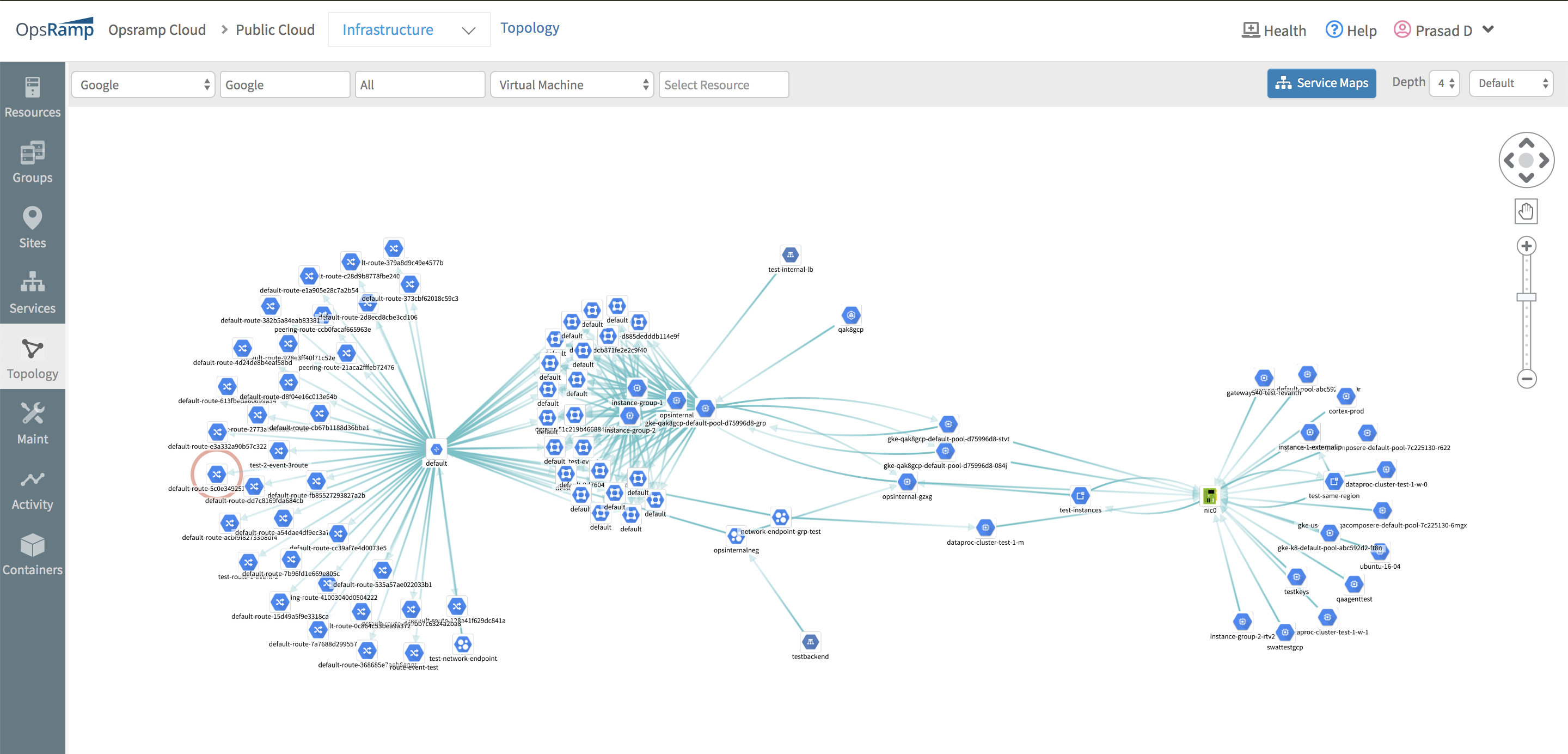
At the core of OpsRamp’s services is its AIOps platform. Using machine learning and other techniques, this service aims to help IT teams manage increasingly complex infrastructure deployments, provide intelligent alerting, and eventually automate more of their tasks. The company’s overall product portfolio also includes tools for cloud monitoring and incident management.
The company says its annual recurrent revenue increased by 300 percent in 2019 (though we obviously don’t know what number it started 2019 with). In total, OpsRamp says it now has 1,400 customers on its platform and alliances with AWS, ServiceNow, Google Cloud Platform and Microsoft Azure.

OpsRamp co-founder and CEO Varma Kunaparaju

According to OpsRamp co-founder and CEO Varma Kunaparaju, most of the company’s customers are mid to large enterprises. “These IT teams have large, complex, hybrid IT environments and need help to simplify and consolidate an incredibly fragmented, distributed and overwhelming technology and infrastructure stack,” he said. “The company is also seeing success in the ability of our partners to help us reach global enterprises and Fortune 5000 customers.”

Kunaparaju told me that the company plans to use the new funding to expand its go-to-market efforts and product offerings. “The company will be using the money in a few different areas, including expanding our go-to-market motion and new pursuits in EMEA and APAC, in addition to expanding our North American presence,” he said. “We’ll also be doubling-down on product development on a variety of fronts.”

Given that hybrid clouds only increase the workload for IT organizations and introduce additional tools, it’s maybe no surprise that investors are now interested in companies that offer services that rein in this complexity. If anything, we’ll likely see more deals like this one in the coming months.

“As more of our customers transition to hybrid infrastructure, we find the OpsRamp platform to be a differentiated IT operations management offering that aligns well with the core strategies of HPE,” said Paul Glaser, Vice President and Head of Hewlett Packard Pathfinder. “With OpsRamp’s product vision and customer traction, we felt it was the right time to invest in the growth and scale of their business.”


from Startups – TechCrunch https://ift.tt/36C71gD
via IFTTT

Codility raises $22M for its tech recruiting platform

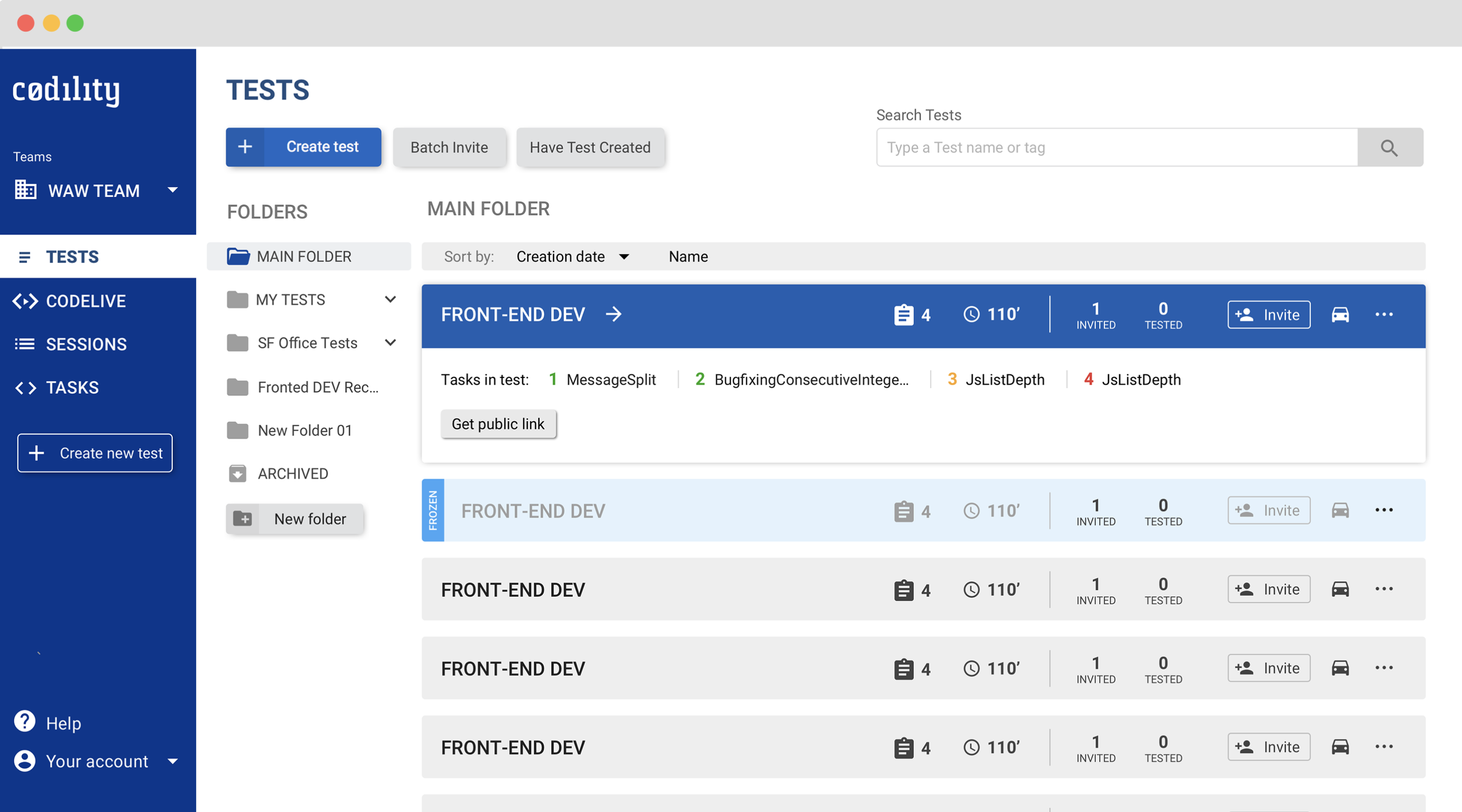
Codility, a platform that helps tech recruiters and hiring managers asses candidates through online coding tests, today announced that it has raised a $22 million Series A round led by Oxx and Kennet Partners.

This marks the first time Codility has raised any funding, after ten years as a bootstrapped company. Clearly, though, despite having achieved double-digit annual recurring revenue in those ten years, the team nowbelieves that it has an opportunity to grow its market share in what is becoming a more competitive market for tech hiring platforms — and to do so, it needs outside funding.

So far, the company has brought on an impressive list of customers, including Microsoft, Tesla, Slack, Okta, Rakuten, American Express, and UnitedHealth Group. In total, the company says it had 1,500 customers in 2019 and helped them evaluate over 450,000 candidates, a number the company says has grown over 50 percent year-over-year.

What sets Codility apart from similar platforms is that it aims to provide coding tests that are closer to what engineers typically face in their day-to-day jobs instead of highly abstract whiteboarding sessions that evaluate their theory of algorithms knowledge.

“The biggest bottleneck to achieving this lies in sourcing, screening, and interviewing,” said Codility CEO Natalia Panowicz. “This is where Codility comes in. We allow businesses to deliver great experiences to candidates and deep insights to the hiring team — improving decision-making and ultimately increasing their overall engineering capacity.”

The company says its system allows it to provide recruiters with a “360-degree evaluation of technical ability” that helps managers ensure that a candidate is a good fit for a given position. Ideally, this also reduces the effect of unconscious bias in the recruiting and placement process.

As part of its platform, Codility offers its technical skills and evaluation services for recruiters, including a shared editor for live technical interviews. In addition, the company also helps companies run their own coding competitions, which they can then use to identify potential candidates, including those who aren’t actively looking for a new job.

“Codility is a great solution for hiring teams based on the needs of quality high-volume hiring; such as consistency, standardization, and scalability,” said Vicky Xiong, Senior Director of Engineering at Okta. “Codility also enables Okta to create a great candidate experience, which is core to our values as a company.”


from Startups – TechCrunch https://ift.tt/37GTGVF
via IFTTT

Where top VCs are investing in travel, tourism and hospitality tech

The venture community has been fixated on travel and hospitality since the dot-com era and early-2000s, when mainstays like Kayak and Airbnb were still Silicon Valley darlings. As the multi-trillion-dollar global travel and hospitality market continues to grow, VCs are still foaming at the mouth for the opportunity to redefine the ways we move and stay around the world.

Despite the cyclical nature of the travel sector, deal flow in travel and hospitality has remained strong and largely stable over the last half-decade, according to data from Crunchbase and PitchBook. Over the same period, we’ve seen more than a handful of startups in the space reach unicorn status, including companies like Klook, Sonder, Flixbus, Vacasa, Wheels Up, TripActions and others.

High-profile funding rounds also appear to be popping up across travel and hospitality’s various sub-sectors, including bookings, activity marketplaces, short-term rental, tourism and hotel platforms. And companies are continuing to pull in funding rounds in the hundreds of millions to billion-dollar range, such as India hotel network company Oyo, which raised $1.5 billion in funding as recently as December.

While VC investment in the space has remained resilient, some investors are predicting it’s only a matter of time before the travel startup world hits a downturn. To get a temperature check on the state of the travel market, the outlook for fundraising and which sub-sectors might present the most attractive opportunities for startups today, we asked five leading VCs at firms spanning early to growth stages to share what’s exciting them most and where they see opportunity in travel, tourism and hospitality tech:

Maze raises $2 million and adds Figma support to enable user testing at scale

Maze wants to reinvent usability tests by letting you turn design prototypes into tests in just a few clicks. It could become the equivalent of a developing test suite for developers, but this time for designers — it could be something that you run before shipping an update to make sure everything works fine. The startup just raised a $2 million funding round and launched a couple of new features.

Since I first covered the company, Maze founders Jonathan Widawski and Thomas Mary still have the same vision. The company wants to empower designers and turn them into user testing experts. With Maze, you can turn your InVision, Marvel or Sketch projects into a browser-based user test.

You can then share a link with a group of users to get actionable insights on your upcoming design changes. Everything works in a web browser on both desktop and mobile.

After running a testing campaign, you get a detailed report with a success rate (how many people tapped on all the right buttons to achieve something in your app), where your users drop off, polling results and more.

That product has been working well, attracting 20,000 users working for IBM, Greenpeace, Accenture, BMW and more.

Now, Maze also supports Figma projects. Given the hype behind Figma, adding this feature is important to stay relevant. It also opens up a new market for Maze — companies using Figma as their main design tool.

Maze has also added a feature that should be particularly useful for companies that are just starting with user testing. The startup can put together a testers panel for you.

This is completely optional and you can just stick with your monthly software-as-a-service plan and work with your own panel. But it provides a good end-to-end experience if you want to centralize all your user testing needs under one roof.

Maze has also raised a $2 million funding round. Amplify Partners is leading the round with existing investors Seedcamp and Partech also participating. Business angels in this round also include Eric Wittman, the former Director of Operations at Adobe and COO at Figma, Peter Skomoroch, the former Head of AI Automation & Data Products at Workday, and Datadog CEO Olivier Pomel.


from Startups – TechCrunch https://ift.tt/2S36FKO
via IFTTT

All eyes are on the next liquidity event when it comes to space startups

At the FAA’s 23rd Annual Commercial Commercial Space Transportation Conference in Washington, DC on Wednesday, a panel dedicated to the topic of trends in VC around space startups touched on public vs. private funding, the right kinds of space companies that should even be considering venture funding, and, perhaps most notably, the big L: Liquidity.

Moderator Tess Hatch, Vice President at Bessemer Venture Partners, addressed the topic in response to an audience question that noted while we’ve heard a lot about how much money will flow into space-related startups from the VC community, we haven’t actually et seen much in the way of liquidity events that prove out the validity of these investments.

“In 2008, a company called Skybox was created and a handful of years later Google acquired the company for $500 million,” Hatch said. “Every venture capitalist’s ears perked up and they thought ‘Hey, that’s pretty good ROI in a short amount of time – maybe the space thing is an investable area’ and then a ton of venture capital investments flooded into space startups, and all of these venture capitalists made one, or maybe two investments in the area. Since then, there have not been many — if any – liquidity events: Perhaps Virgin Galactic going public via the SPAC (special uprose vehicle) on the New York Stock Exchange late last year would be the second. So we’re still waiting; we’re still waiting for those exits, we are still waiting for companies to pave the path for the 400+ startups in the ecosystem to return our investment.”

Hatch added that she’s looking at a number of companies who have the potential to break this somewhat prolonged exit drought in 2020, including five who are either quite mature in terms of their development, naming SpaceX, Rocket Lab, Planet and Spire as all likely candidates to have some kind of liquidity event in 2020, with the mostly likely being an IPO.

Space as an industry was described to me recently as a ‘maturing’ startup market by Space Angels CEO Chad Anderson, by virtue of the distribution of activity in terms of the overall investment rounds in the sector. There is indeed a lot of activity with early stage companies and seed rounds, but the fact remains that there hasn’t been much in the way of exits, and it’s also worth pointing out that corporate VCs haven’t been as acquisitive in space as some of their consumer and enterprise technology counterparts.

The panel touched on a lot more apart from liquidity, which actually only came up towards the end of the discussion, which included panelists Astranis CEO and co-founder John Gedmark; Capella Space CEO and founder Payam Banazadeh and Rocket Lab VP of Global Commercial Launch Services Shane Fleming. Both Gedmark and Banazadeh addressed aspects of the risks and benefits of seeking VC as a space technology company.

“Not every space business is a venture-backable business,” said Banazadeh earlier in the conversation. “But there are a lot of space businesses that are specifically going after raising venture money, and that’s dangerous for everyone – because at the end of the day venture is looking at high risk, high return. The ‘high return’ comes from being able to get substantial amount of revenue in a market that’s big
enough for those revenues to be coming from. But if your idea is to go build, maybe, some very specific part in a satellite, then you have to make the case of why you’ll be able to make those returns for the investors, and in a lot of cases, that’s just not possible.”

Banazadeh also concedes that doing any kind of space technology development is expensive, and the money has to come from somewhere. Gedmark talked about one popular source, government funding and grants, and why that often isn’t as obviously a positive thing for startups as it might seem.

“Small government grants can be great, and obviously a fantastic source of non dilutive capital,” Gedmark said. “But there is a little bit of a trick there, or something to be aware of: I think people are often surprised how much time is spent in the early days of a startup refining the exact idea and the product, and if you’re not certain that you have the that product market fit […] then, the government grant can be extremely dangerous, because they will fund you to do something that is sort of similar to what to what you’re doing, but it really prevents you changing your approach later; you’re going to end up spending time executing on the specific project of the program manager on the government side and you’re executing on what they want.”

VC funds, on the other hand, come with the built-in expectation that you’re going to refine and potentially even change direction altogether, Gedmark says. Depending on the terms of the public funding you’re seeking, that flexibility may not be part of the arrangement, which ultimately could be more important than a bit of equity dilution.


from Startups – TechCrunch https://ift.tt/2RZ7qVo
via IFTTT

UCSD hospital gets a drone delivery program powered by Matternet and UPS

Drone delivery may not make a lot of sense for food or parcel delivery yet, but for hospitals it could be a lifesaver. A new test program is being inaugurated at UC San Diego’s Jacobs Medical Center, where Matternet drones operated by UPS will fly blood samples and other items to and from other nearby facilities.

The new program will be the third under Matternet’s belt; An earlier partnership with UPS has made some 1,900 flights at WakeMed hospital in North Carolina, and flights with SwissPost in Zurich resume this month after crashes put them on ice over the summer.

Biological samples and other items that need to be moved quickly generally travel by courier service, which is of course fine sometimes, but not during rush hour. No one wants to have a second spinal tap because the first one got stuck in traffic.

The flights these drones will be undertaking will be autonomous, but with remote monitoring and line of sight from Jacobs to the Moores Cancer Center and Center for Advanced Laboratory Medicine, both of which are less than a mile away.

It’s a big month for Matternet, which in addition to these two concurrent flight test programs recently pulled in a strategic round from the healthcare-focused McKesson Ventures.


from Startups – TechCrunch https://ift.tt/2O4kN5t
via IFTTT

Verkada raises $80M at $1.6B to be every building’s security OS

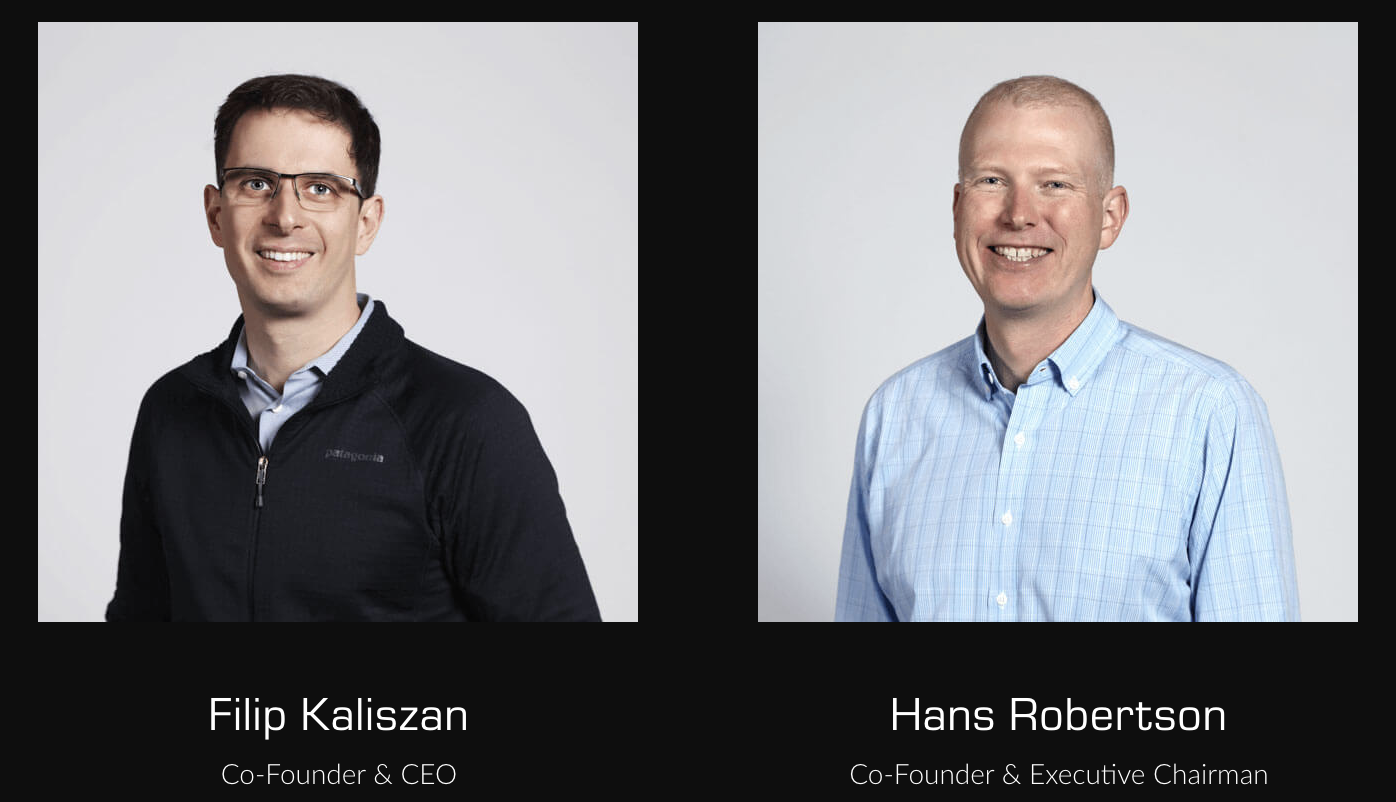
50 iPads were stolen from Verkada co-founder Hans Robertson’s old company. Only when they checked the security system did they realize the video cameras hadn’t been working for months. He was pissed. “The market lagged behind the progress seen in the consumer space, where someone could buy high-end cameras with cloud-based software to protect their home” Verkada’s CEO and co-founder Filip Kaliszan tells me of his own attempt to buy enterprise-grade security hardware.

Usually, startups ascend on the backs of fresh technologies and developer platforms. But Kaliszan and Robertson realized that commercial security was so backward that just implementing the established principles of machine vision and the cloud could create a huge company. The plan was to keep data secure yet accessible and train its cameras to take clearer photos when AI detects suspicious situations instead of just grainy video.

At first, few could see the vision through the slow upgrade cycles and basement security rooms common with most potential clients. “The seed and the A were extremely difficult rounds to raise compared to the later rounds because people didn’t believe we could execute what were are proposing” Kaliszan glumly recalls.

But today Verkada receives a huge vote of confidence. It’s just raised an $80 million Series C at a stunning $1.6 billion post-money valuation thanks to lead investor Felicis Ventures writing Verkada its biggest check to date. The cash brings Verkada to $139 million in funding to sell dome cameras, fisheye lenses, footage viewing stations, and the software to monitor it all from anywhere.

Why sink in so much cash at a valuation triple that of Verkada’s $540 million price tag after its April 2019 Series B? Because Verkada wants to bring two-factor authentication to doors with its new access control system that it’s announcing is now in beta testing ahead of a Spring launch. Instead of just allowing a stealable key fob or badge to open your office entryway, it could ask you to look into a Verkada camera too so it can match your face to your permissions.

“Our mission is to be the essential physical security software layer for every building, and the foundation of a larger enterprise IoT infrastructure” Kaliszan tells me. By uniting security cameras and door locks in one system, it could keep banks, schools, hospitals, government buildings, and businesses safe while offering new insights on how their spaces are used.

The founders’ pedigrees don’t hurt its efforts to sell that future to investors like Next47, Sequoia Capital, and Meritech Capital that joined the round. Robertson co-founded IT startup Meraki and sold it to Cisco for $1.2 billion. Kaliszan and his other co-founders Benjamin Bercovitz and James Ren started CourseRank for education software while at Stanford before selling it to Chegg.

Making a better product than what’s out there isn’t rocket science, though. Many building security systems only let footage be accessed from a control room in the building…which doesn’t help much if everyone’s trying to escape due to emergency or if a manager elsewhere simply wants to take a look. Verkada’s cloud lets the right employees keep watch from mobile, and data is also stored locally on the cameras so they keep recording even if the internet cuts out. “Our competitors stream unencrypted video and it’s on you to protect it. We’re responsible for handing that data” Kaliszan says.

Verkada’s machine vision software can make sense of all the footage its cameras collect. “We can immediately show them all the video containing a particular person of interest rather than manually searching through hours of footage” Kaliszan insists. “Our platform can use AI/machine learning to recognize patterns and behaviors that are out of the norm in real-time.”

For example, a hostage negotiator was able to use Verkada’s system to assess whether a SWAT team needed to invade a building. Verkada can group all spottings of an individual together for review, or scan all the footage for people wearing a certain color or with other search filters.

2500 clients including 25 Fortune 500 companies are already using Verkada. In the last year it’s tripled revenue, parterned with 1,100 resellers, launched nine new camera models, added people and vehicle analytics, opened its first London office, and it’s on track to grow from 300 to 800 employees by the end of 2020.

“We call this reinvention” says Felicis Ventures founder and managing director Aydin Senkut. “One thing people underestimate is how big this market is. Honeywell is valued at $110 billion-plus. There’s Chinese company that’s over $50 billion. The opportunity to be the operating system for all buildings in the world? Sounds like that market couldn’t be better.” Senkut knows Verkada works because he’s had it installed in all his homes and offices.

Most enterprise software companies don’t have to worry about the complexities of hardware supply chains. There’s always a risk that its sales process stumbles, leaving it stuck with too many cameras. “We’re still burning money. We’re not there yet or we wouldn’t be raising venture. Because we’re going after a mature market, you can’t come at it with a model that doesn’t make sense. Investors come at it from a hard-nosed approach” Robertson admits.

“People have a tendency to write off Verkada as a boring camera company. They don’t realize how access control as the second product is going to supercharge the company’s potential” Senkut declares.

One bullet Verkada dodged is the one firmly lodged in Amazon’s chest. Ring security cameras have received stern criticism over Amazon’s cooperation with law enforcement that some see as a violation of privacy and expansion of a police state. “We don’t have any arrangements with law enforcement like Ring” Kaliszan tells me. “We view ourselves as providing great physical security tools to the people that run schools, hospitals, and businesses. The data that those organizations gather is their own.”


from Startups – TechCrunch https://ift.tt/2U7uGD2
via IFTTT